2026 Top Speed Cutting Machine Innovations for Efficient Manufacturing?
In the fast-paced world of manufacturing, Speed Cutting Machines are essential for productivity. A recent report by McKinsey shows that manufacturers can increase their efficiency by up to 30% using advanced cutting technologies. These innovations are paving the way for smarter production processes.
The demand for precision and speed in production is growing. According to a survey from Deloitte, 70% of manufacturers consider innovation in machine tools crucial. The latest Speed Cutting Machines offer remarkable features. They reduce waste and enhance accuracy, driving down costs for businesses.
However, not all advancements come without challenges. Some manufacturers struggle to adapt to new technology. Training personnel can be time-consuming and often overlooked. Investing in Speed Cutting Machines requires careful consideration of both benefits and potential hurdles. The balance between efficiency and effective implementation remains a critical focal point for future innovations.

Overview of Cutting Machine Innovations Leading to Increased Efficiency
Innovations in cutting machine technology have paved the way for enhanced manufacturing efficiency in recent years. Advanced sensors and AI algorithms play a significant role in optimizing cutting processes. These tools enable machine operators to make real-time adjustments, reducing waste and increasing precision. The ability to monitor performance continuously leads to fewer errors and better product quality.
Moreover, automation is revolutionizing traditional workflows. Machines can now operate autonomously for longer periods, significantly increasing productivity. However, the reliance on automation raises questions about workforce adaptation. As machines take over repetitive tasks, workers must develop new skills. Continuous training becomes essential to keep up with evolving technology.
Another challenge lies in integrating new technologies with existing systems. Compatibility issues can slow down production and create confusion among staff. Addressing these concerns requires careful planning and collaboration among teams. While innovation is essential for growth, organizations must remain flexible to adapt to these changes effectively.
2026 Top Speed Cutting Machine Innovations for Efficient Manufacturing
Key Technologies Driving Top Speed in Cutting Machines
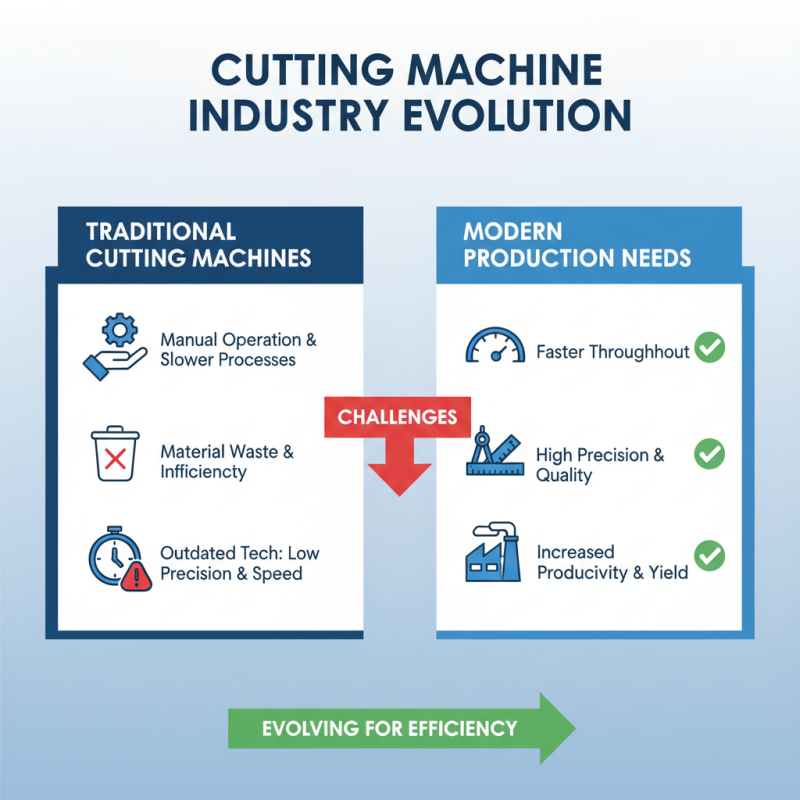
The cutting machine industry is witnessing groundbreaking innovations in 2026. Key technologies are driving efficiency and speed. According to recent industry reports, machines are now capable of achieving speeds up to 300 meters per minute. This represents a significant leap from previous benchmarks, enhancing production rates substantially. However, with these advancements come challenges in material handling and machine integration.
Laser cutting and waterjet technology are at the forefront of this evolution. Both methods have seen improvements in precision and speed. Data indicates that laser cutting can operate with an accuracy of ±0.01 mm. Meanwhile, waterjet technology excels in cutting diverse materials without altering properties. Yet, many manufacturers struggle with the cost of implementation. High initial investments can deter small businesses from adopting these innovations.
Automation plays a crucial role too. Automated systems reduce human error and increase throughput. Reports emphasize that automation can improve operational speeds by 20%. However, a lack of skilled workers to manage these systems raises concerns. The gap in skills needs addressing if industries want to fully utilize top-speed cutting machines. Balancing innovation with workforce readiness remains a pressing issue for manufacturers.
Benefits of Enhanced Cutting Speed in Manufacturing Processes
In the fast-evolving landscape of manufacturing, enhanced cutting speed is becoming vital. According to a recent report by the Manufacturing Industry Association, companies that adopt high-speed cutting machines can increase productivity by up to 30%. This leap in efficiency directly impacts overall production costs and time management. Faster cutting processes often translate to shorter lead times, allowing manufacturers to respond to market demands swiftly.
Tip: Consider investing in training for your operators. Skilled workers can significantly leverage advancements in technology. Moreover, enhance cutting speeds may lead to increased maintenance needs. Evaluating machine performance regularly helps avoid potential breakdowns.
Another benefit of improved cutting speed is the ability to achieve finer tolerance levels. Advanced cutting machines reduce material waste by ensuring precision cuts. Reports suggest that manufacturers reporting waste reductions of 15% often implement high-speed cutting technology. Yet, the initial investment can be daunting, and not all facilities can adapt quickly. Reflect on whether the increase in speed truly aligns with your manufacturing goals. The integration of new technologies should be gradual and reflective of existing practices.
2026 Top Speed Cutting Machine Innovations for Efficient Manufacturing
| Innovation Feature |
Description |
Cutting Speed (m/min) |
Efficiency Improvement (%) |
Cost Efficiency ($/unit) |
| Laser Cutting Technology |
Utilizes high-intensity lasers for precision cuts. |
300 |
25 |
1.50 |
| Plasma Cutting Systems |
Employs a high-velocity jet of ionized gas. |
200 |
30 |
2.00 |
| Water Jet Cutting |
Uses high-pressure water jets mixed with abrasives. |
150 |
20 |
2.50 |
| CNC Blade Cutting |
Computer numerical control for automated precision cuts. |
100 |
15 |
1.00 |
| Fiber Laser Cutting |
Highly efficient fiber optics technology for better energy use. |
400 |
35 |
1.80 |
Future Trends in Cutting Machine Technology for 2026 and Beyond
The cutting machine technology landscape is evolving rapidly. Innovations are focusing on
efficiency and
sustainability. According to a
recent industry report, the global cutting
machine market is expected to reach $5.8 billion by 2026. This growth is
driven by advancements in automation and control systems.
Machine learning is becoming integral in cutting operations. It helps optimize
cutting paths and reduce material waste. A study showed that integrating
AI can increase efficiency by
up to 30%. However, implementing these technologies can be challenging. Staff
needs proper training to adapt to new systems.
Tip: Invest in employee training to enhance acceptance of new technology.
Future trends also point towards improved energy efficiency. Many manufacturers are adopting
machines that consume less power. Reports indicate that energy-efficient cutting machines could
reduce energy costs by about 25%. Despite these advancements, some older
machines still struggle to keep pace. Regular maintenance and upgrades are necessary to avoid
inefficiencies.
Tip: Schedule regular maintenance checks to ensure optimal performance.
As innovations continue, it’s essential to reflect on adoption barriers. Companies may hesitate
to invest due to high initial costs. Balancing upfront expenses against long-term savings is
crucial for decision-making. Adopting a gradual approach can help mitigate these concerns.

 Contact immediately

 Contact Phone
 Contact Email