Why Choose a Speed Cutting Machine for Your Production Needs?
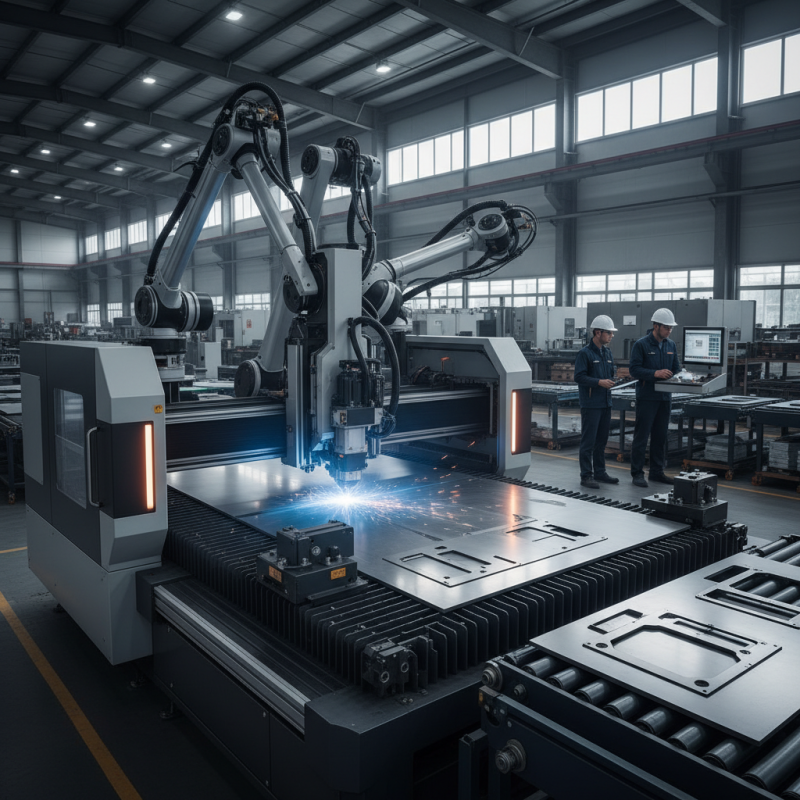
In today's fast-paced production landscape, efficiency is paramount. Manufacturers face constant pressure to enhance output while maintaining quality. A Speed Cutting Machine emerges as a critical solution to meet these demands. This advanced technology accelerates the cutting process, reducing lead times significantly.
Integrating a Speed Cutting Machine can streamline workflows. It allows businesses to optimize resources effectively. Employees can focus on higher-value tasks, reducing the risk of burnout. However, some may worry about the initial investment. This challenge requires careful consideration. Yet, the potential return on investment often justifies the expense.
Investing in a Speed Cutting Machine can also elevate product precision. It minimizes human error and delivers consistent results. As industries evolve, staying competitive is essential. Embracing such innovative equipment can pave the way for future growth.
Benefits of Speed Cutting Machines in Modern Manufacturing
Speed cutting machines are transforming modern manufacturing. Their efficiency and precision offer tangible benefits. These devices are designed to cut materials rapidly while maintaining high accuracy. This precision is crucial for industries where error can lead to costly waste.
One major advantage is the increased production speed. Traditional cutting techniques often lag behind. Speed cutting machines can handle multiple tasks simultaneously. This multitasking capability shortens production cycles significantly. Manufacturers can achieve higher output without compromising quality. It's striking to see how these machines can reduce downtime.
However, reliance on speed cutting machines has its challenges. They require a skilled workforce for operation and maintenance. Additionally, the initial investment can be substantial. Companies must evaluate whether the long-term benefits outweigh these costs. Balancing speed and quality often demands a careful approach, as not all materials respond well to rapid-cutting methods.
Comparison of Speed Cutting Machines and Traditional Cutting Methods
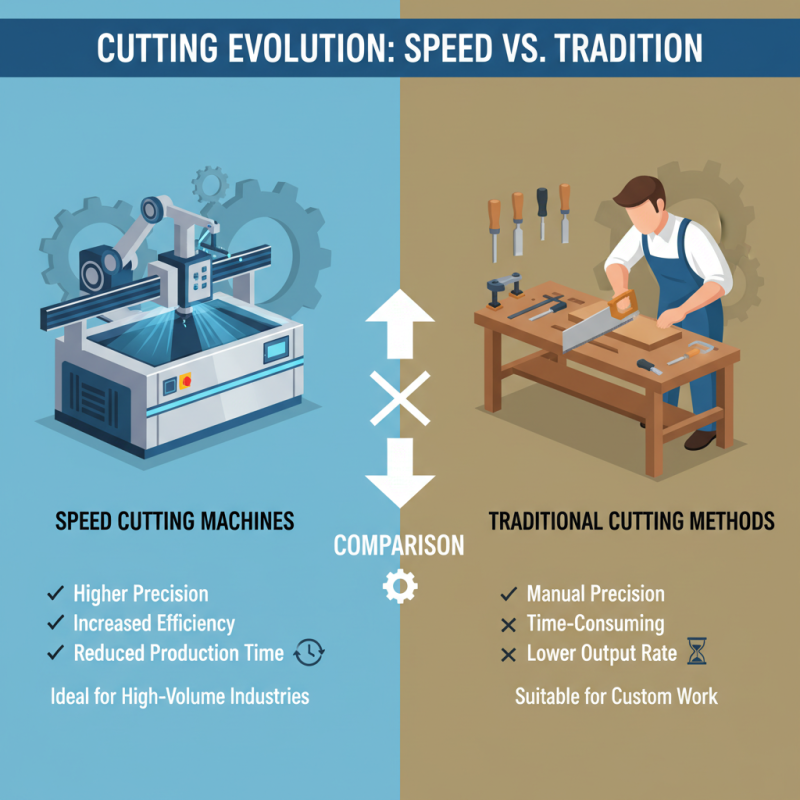
When comparing speed cutting machines to traditional cutting methods, several factors come into play. Speed cutting machines utilize advanced technology to achieve higher precision and efficiency. They can reduce production times significantly, allowing for more output in less time. This is particularly beneficial for industries that require scalability and quick turnarounds.
On the other hand, traditional cutting methods often rely on manual processes, which can lead to inconsistencies. Skilled labor is essential in these methods, and the potential for human error always exists. Materials can be wasted if measurements are off. Moreover, maintaining traditional equipment can be costly, both in terms of maintenance and labor. It's hard to ignore how quickly production demands can outpace the capabilities of older methods.
However, implementation of speed cutting technology is not without challenges. Upgrading equipment requires investment and training. Understanding the mechanics behind new machines is crucial for their successful use. Transitioning from familiarity to efficiency involves a learning curve. Yet, the potential benefits often outweigh these hurdles, making it an exciting opportunity for production enhancement.
Key Features to Consider When Choosing a Speed Cutting Machine
When selecting a speed cutting machine, several key features warrant attention. The machine's cutting speed is crucial. According to a report from the International Journal of Manufacturing Technology, machines with higher cutting speeds can increase productivity by up to 30%. Such machines permit faster material removal, reducing cycle times significantly. This means you can process larger batches more efficiently, a necessity in today's fast-paced manufacturing environment.
Another essential feature is the versatility of the machine. A multifaceted cutting tool can handle various materials and thicknesses. For instance, machines that adapt well to both metal and plastic are increasingly popular. An industry survey revealed that nearly 40% of manufacturers prefer machines that can switch between materials seamlessly. This adaptability can mitigate downtime and enhance overall operational efficiency, a fact not to be overlooked.
The precision of the cutting process should also be high on your criteria list. Reports indicate that machines with advanced CNC capabilities deliver tolerance levels within 0.001 inches. While investment in such technology may seem steep, the long-term savings from reduced waste and reworks can be substantial. Investing in precision, however, presents challenges. Not every factory may have the skilled technicians required for setting and operating advanced systems effectively. Thus, assessing your workforce's capabilities is equally important.
Why Choose a Speed Cutting Machine for Your Production Needs? - Key Features to Consider When Choosing a Speed Cutting Machine
| Feature |
Description |
Importance |
| Cutting Speed |
The machine's cutting speed in meters per minute, which affects productivity. |
High speed increases output and efficiency. |
| Precision |
The accuracy of the cuts, usually measured in mm. |
Crucial for high-quality finished products. |
| Ease of Use |
User-friendly controls and interfaces simplify operation. |
Reduces training time and operator errors. |
| Material Compatibility |
Range of materials the machine can cut, e.g., metals, plastics, wood. |
Versatility enables broader application in production. |
| Maintenance Requirements |
Frequency and complexity of required maintenance tasks. |
Lower maintenance leads to reduced downtime. |
| Safety Features |
Safety mechanisms like guards and emergency stops. |
Essential for protecting operators during operation. |
Impact of Speed Cutting Machines on Production Efficiency and Quality
Speed cutting machines significantly enhance production efficiency and quality. According to a report by the International Journal of Advanced Manufacturing Technology, companies adopting these machines can see efficiency gains of up to 30%. This increase can be attributed to the higher cutting speeds and reduced cycle times offered by modern technology. Faster processing reduces the time required to complete each task, allowing for greater output in less time.
In addition to efficiency gains, these machines improve product quality. High-precision cutting can lead to fewer defects and better finishes. A study published by the American Society of Mechanical Engineers highlights that precise cutting techniques can reduce scrap rates by up to 25%. This not only cuts costs but also boosts customer satisfaction. However, the initial investment in speed cutting machines can be daunting for some manufacturers. Adjusting to new technology often requires a learning curve, which can temporarily disrupt production.
Moreover, maintenance and operational training are essential. Neglecting these aspects can negate the efficiency benefits. Regular maintenance is crucial to ensure machines perform at optimal levels. Businesses must weigh the upfront costs against potential long-term gains. The impact of these machines, however, suggests that when implemented thoughtfully, they can revolutionize production processes.
Impact of Speed Cutting Machines on Production Efficiency and Quality
Common Industries Utilizing Speed Cutting Machines for Production
Speed cutting machines have increasingly become vital in various industries. Manufacturing, automotive, and aerospace sectors significantly benefit from these advanced tools. For instance, according to a recent report by the Industrial Manufacturing Association, 70% of companies in the automotive sector stated that speed cutting machines have improved their production efficiency. This trend highlights the role of precision and speed in maintaining competitive advantages in these industries.
The aerospace industry, in particular, emphasizes accuracy and quality. Speed cutting machines help produce parts with tolerances as tight as 0.001 inches. Reports show that companies leveraging this technology reduce material waste by up to 30%. However, implementing speed cutting machines comes with challenges. Integration into existing workflows can be complicated. Some operators need additional training. Thus, while the benefits are significant, approaching implementation thoughtfully is crucial for success.
Moreover, industries such as metal fabrication and electronics are also adopting speed cutting technology. These sectors report faster turnaround times and better end-product quality. Yet, companies often face difficulties selecting the right machine for their specific needs. Regular maintenance is another aspect that cannot be overlooked. Neglecting this can hinder performance. Balancing these factors can lead to more informed decisions in utilizing speed cutting machines effectively.

 Contact immediately

 Contact Phone
 Contact Email