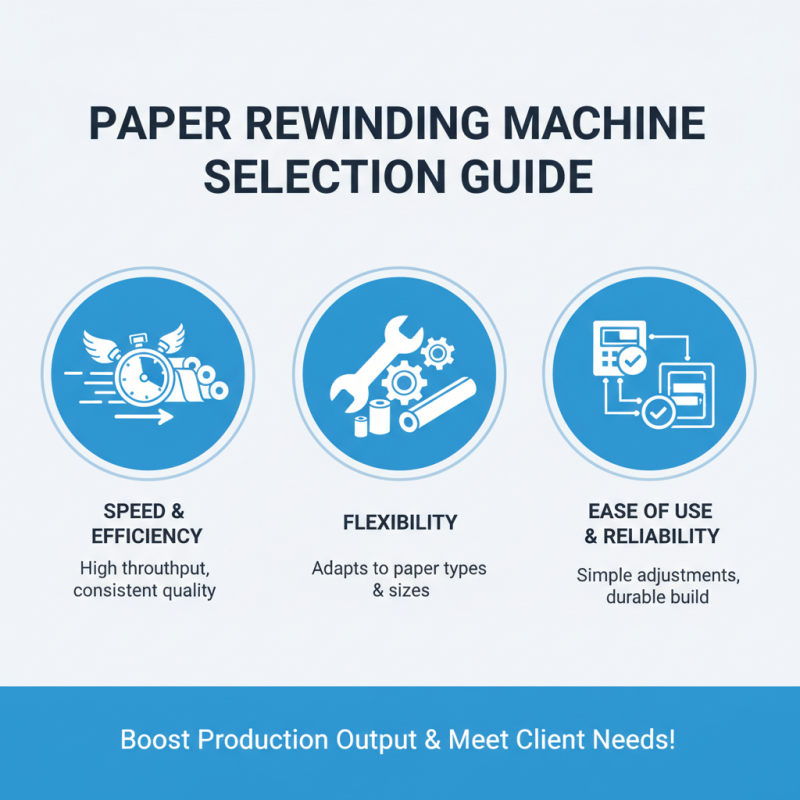
10 Essential Tips for Choosing the Right Paper Rewinding Machine?
Choosing the right Paper Rewinding Machine is crucial for efficiency. The global paper industry has been growing steadily, with a projected market size of over $600 billion by 2025. Expert Sarah Johnson, a leading authority in paper machinery, states, "Selecting the right equipment can make or break your production line."
A suitable Paper Rewinding Machine enhances productivity and quality. Considerations include machine speed, roll diameter, and user-friendliness. Every detail matters, such as the type of paper being rewound and workflows. Industry data shows that the right machine can boost output by up to 30%. However, many companies overlook these factors, leading to costly mistakes.
The selection process is often muddled. Features may seem appealing but fail in practice. Misalignment between the machine and company needs can result in inefficiencies. Investing time to evaluate options can prevent regrets later. By focusing on essential features, businesses can make informed choices that positively impact their operations.
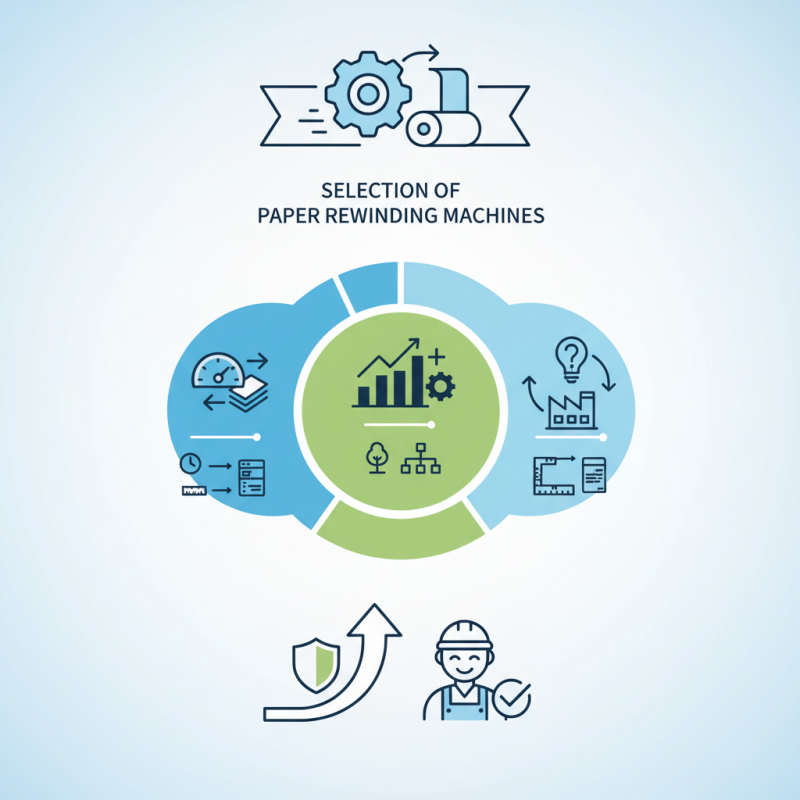
Factors to Consider When Selecting a Paper Rewinding Machine
Choosing the right paper rewinding machine is crucial for operational efficiency. Several factors should be on your checklist. One important aspect is machine capacity. According to industry data, machines with higher output rates can significantly enhance productivity. For instance, a machine capable of handling 1,500 meters per minute can deliver better results than one limited to 800 meters per minute.
Another factor to consider is precision and quality. Flaws in the winding process can lead to significant waste. Reports indicate that up to 30% of production loss can stem from poor rewinding quality. Look for machines that offer adjustable tension control. This feature helps maintain material integrity during the rewind process, which is essential for high-quality outcomes.
Additionally, consider the adaptability of the machine. Industry trends show that flexibility to handle different paper types is increasingly important. Machines that can seamlessly switch between various roll dimensions and paper grades are in high demand. A lack of versatility may result in lost opportunities, as shown by surveys indicating that 60% of businesses seek equipment that accommodates diverse production needs.
10 Essential Tips for Choosing the Right Paper Rewinding Machine
| Factor |
Description |
Importance Level (1-5) |
Notes |
| Machine Capacity |
Consider the volume of paper you need to rewind. |
5 |
Align with production needs. |
| Rewinding Speed |
Evaluate the speed to optimize efficiency. |
4 |
Faster speeds may increase wear and tear. |
| Automation Level |
Check if the machine is manual or automated. |
5 |
Automation improves consistency. |
| Durability |
Assess the build quality and material. |
5 |
Critical for long-term use. |
| Size of Rolls |
Determine the diameter and width of rolls the machine can handle. |
4 |
Must match your current supply. |
| Ease of Use |
Evaluate the user interface and operation ease. |
4 |
Training time can impact productivity. |
| Maintenance Requirements |
Look for the recommended maintenance schedule. |
3 |
Less maintenance means less downtime. |
| Manufacturer Support |
Assess availability of customer service and parts. |
4 |
Good support ensures smooth operations. |
| Cost |
Consider the initial investment vs potential ROI. |
5 |
Balance quality with budget constraints. |
| Energy Efficiency |
Evaluate the power consumption of the machine. |
3 |
Lower energy use can reduce costs. |
Understanding Different Types of Paper Rewinding Machines Available
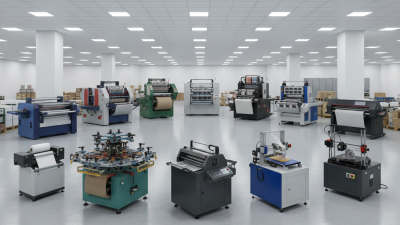
When selecting a paper rewinding machine, understanding the types available is crucial. There are various models, including automatic, semi-automatic, and manual machines. Automatic machines, for instance, can enhance productivity significantly. They often have features like programmable controls, which can reduce labor costs. Industry reports suggest that automated systems can improve efficiency by up to 30%.
Semi-automatic machines balance manual input with automation. They require some operator guidance, which can be advantageous for businesses just starting. While they might not offer the same efficiency as fully automatic machines, they often come at a lower price point. Manual machines, on the other hand, are common in small operations. They rely heavily on human operation, which can introduce variability in output quality and production speed.
It's essential to assess your production needs. A quick assessment can reveal that a fully automated model may not be necessary for lower production runs. This realization can save costs, but it also requires a balance between productivity and investment. Many companies face difficulties when choosing the right machine, leading to challenges down the road. Understanding the specific needs of your operation can clarify which type of rewinding machine is best suited for your goals.
Paper Rewinding Machines Performance Comparison
This bar chart compares the production speed (in meters per minute) of different types of paper rewinding machines. The data illustrates how various designs can impact efficiency and output.
Evaluating Production Capacity and Speed Requirements
When choosing a paper rewinding machine, evaluating production capacity and speed is crucial. Many manufacturers require machines that accommodate varying sizes and types of paper rolls. According to industry reports, a staggering 70% of production delays arise from inadequate machinery. This can lead to significant financial losses.
Production speed is another vital consideration. Modern machines can operate at speeds exceeding 600 meters per minute. However, some facilities struggle to achieve even half that. It's essential to match the machine speed with your production goals. Poor alignment can result in waste and inefficiency.
It's also important to assess the maximum roll diameter and width. Most industries work with rolls ranging from 200 to 1,000 millimeters. Many businesses mistakenly overlook this specification, leading to compatibility issues. Regularly checking and reassessing production needs can help avoid these pitfalls. Investing in the right equipment is pivotal for meeting demand and maintaining quality standards.
Assessing Cost and Long-Term Maintenance of Rewinding Machines
When selecting the right paper rewinding machine, assessing cost is crucial. Costs vary widely based on features and specifications. A high initial price might seem daunting, yet it may offer better efficiency. Sometimes, cheaper options lead to frequent repairs and replacement parts. This can quickly surpass the cost of a more robust machine.
Long-term maintenance often determines the true cost of ownership. Some machines require regular servicing, involving skilled labor. This adds to operational expenses over time. Look for equipment with easier maintenance schedules. This can reduce downtime and increase productivity.
Investing time in research is important. Examine user reviews and maintenance records. Are there common issues? Gaps in performance can be frustrating. It's essential to weigh immediate costs against potential long-term savings. Finding a balance is tricky but necessary. Ultimately, the right choice hinges on your specific needs and budget constraints.

 Contact immediately

 Contact Phone
 Contact Email