Top Speed Cutting Machines for Efficient Global Sourcing?
In the fast-paced world of global sourcing, the quest for efficiency is paramount. The introduction of Speed Cutting Machines has revolutionized manufacturing processes. These machines enhance productivity by significantly reducing cutting times and errors. Industries increasingly rely on them to maintain a competitive edge.
However, not all Speed Cutting Machines deliver the same results. Variability in quality and performance can lead to unforeseen challenges. Potential drawbacks include maintenance issues and the need for skilled operators. Companies must carefully assess their options to ensure they choose the right technology for their workflow.
Understanding the nuances of Speed Cutting Machines is crucial. The balance between speed and precision often defines the success of a sourcing strategy. Companies can boost their capabilities when they invest in reliable equipment. The right machine can transform operations, but it requires ongoing evaluation to ensure effectiveness.

Top Speed Cutting Machines: An Overview of Key Technologies
Cutting machines play a vital role in global sourcing efficiency. Key technologies in this field significantly enhance production speeds and accuracy.
Laser cutting, for instance, offers precision that traditional methods can't match. This technology uses focused light beams to slice through materials, reducing waste and improving results.
Another noteworthy technology is water jet cutting. It employs high-pressure water mixed with abrasive materials to provide clean cuts.
This method is versatile and is suitable for various substances, from metals to glass.
Users appreciate the minimal thermal impact, which preserves material integrity.
However, some challenges exist. The initial investment for advanced cutting machines can be high. Additionally, operators require training to maximize these tools' potential.
Evaluating production needs and long-term benefits is essential before making such investments.
This reflection on efficiency and cost can lead to better sourcing decisions.
Market Trends in Global Sourcing of Cutting Machines for Efficiency
The global sourcing landscape for cutting machines is evolving rapidly. Efficiency is now a critical factor driving purchasing decisions. Manufacturers look for ways to optimize production while minimizing costs. The focus on sustainable materials has also become prominent. Buyers are keen on machines that not only cut efficiently but also reduce waste.
New technologies are emerging to enhance operational efficiency. Advanced automation features are making cutting machines smarter. Companies are investing in machines equipped with sensors and data analytics. These innovations help in real-time monitoring and adjustment of operations. However, the rapid pace of change is challenging for many businesses. Adapting to these trends requires continuous learning and investment.
Despite these advancements, some issues persist. Many users still grapple with integrating new machines into existing workflows. There are often gaps in training that hinder the effective use of technology. Moreover, sourcing reliable suppliers remains a challenge. Companies must be vigilant in ensuring they select partners who align with efficiency goals. As the market shifts, a careful approach to sourcing is essential for long-term success.
Top Speed Cutting Machines for Efficient Global Sourcing
| Machine Type |
Cutting Speed (m/min) |
Power (kW) |
Material Compatibility |
Market Demand (%) |
| Laser Cutting Machines |
10-30 |
1.5-5 |
Metal, Plastic |
35 |
| Water Jet Cutting Machines |
5-15 |
30-100 |
Metal, Glass, Stone |
25 |
| Plasma Cutting Machines |
20-40 |
15-50 |
Metal |
20 |
| CNC Milling Machines |
15-100 |
5-20 |
Metal, Plastic |
15 |
| Band Sawing Machines |
10-20 |
3-15 |
Metal, Wood |
5 |
Comparative Analysis of Speed and Precision in Cutting Machines
In the realm of cutting machines, speed and precision are two critical factors shaping efficiency. Many industries rely on these machines for varied applications. The right balance between speed and the accuracy of cuts determines production quality and material wastage. Companies often face challenges when upgrading equipment. Achieving higher speeds can lead to decreased precision, forcing engineers to find a sweet spot.
A comparative analysis of different cutting technologies reveals interesting insights. Laser cutting, for example, offers remarkable precision but may often lag in speed when processing thicker materials. On the other hand, mechanical cutters can achieve quick results, but inconsistencies in precision can arise, leading to increased rework. Establishing standards and benchmarks can help manufacturers choose the best machine for their specific needs, though often anecdotal experiences shape decisions more than data-driven evaluations.
Machine operators may notice that over time, factors such as maintenance and operator skill play crucial roles in performance. Poorly maintained machines can hinder speed and affect cutting quality. Additionally, a lack of training can lead to mistakes that impact productivity. Continuous learning and assessment remain vital for ensuring cutting machines meet evolving industry demands.
Impact of Automation on Cutting Machine Performance and Sourcing
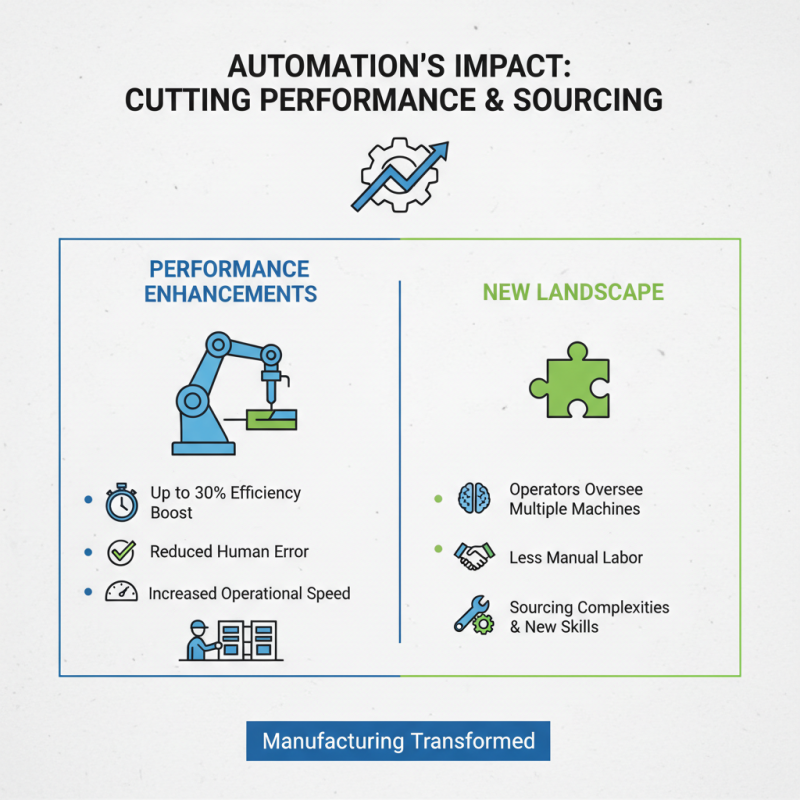
The automation of cutting machines is transforming the manufacturing landscape. Reports indicate that automated systems can enhance production efficiency by up to 30%. This increase is primarily due to reduced human error and increased operational speed. Operators now oversee multiple machines simultaneously, requiring less manual labor. However, this shift also presents new challenges.
While efficiency is on the rise, sourcing materials has become complex. A recent study found that 45% of manufacturers faced sourcing inconsistencies in automated environments. Different machine capabilities can lead to variability in material requirements, complicating procurement strategies. Companies must adapt by investing in robust supply chain management systems. Automation doesn't eliminate sourcing challenges; it shifts them.
Moreover, there is an ongoing debate among industry experts about the need for skilled workers in automated environments. As machines take over routine tasks, the demand for specialized knowledge grows. While 70% of companies recognize the importance of training, many struggle to implement effective programs. The balance between automation and human expertise is crucial for long-term success.
Case Studies: Successful Global Sourcing of High-Speed Cutting Machines
Global sourcing of high-speed cutting machines has transformed many industries. Analyzing successful case studies reveals key strategies. Companies have embraced a data-driven approach to selection. They focus on the specific needs of their production processes. This targeted strategy ensures maximum efficiency in tool performance.
One notable example involved a manufacturing firm seeking to enhance productivity. They evaluated several suppliers based on speed, precision, and reliability. Despite initial dissatisfaction with a few options, persistence paid off. Ultimately, they discovered a supplier whose cutting machine surpassed expectations. The machine's adaptability to various materials was a game changer. This experience highlights the importance of not settling too quickly.
Another case involved a startup aiming for quality over quantity. They prioritized high-speed cutting options that could handle diverse operations. However, they faced challenges in balancing costs with performance. Through persistent refinement and adaptation, they managed to source an efficient machine that fit their budget. This journey underscores the need for ongoing research and agility in sourcing decisions.
Top Speed Cutting Machines Efficiency in Global Sourcing

 Contact immediately

 Contact Phone
 Contact Email