How to Choose the Best Flexo Label Printing Machine?
Choosing the right Flexo Label Printing Machine can shape your label quality, production speed, and long-term operating costs. It is not simply a choice between machine sizes or attractive specifications. A reliable decision begins with the labels you actually produce.
Consider your substrate, ink system, label width, repeat length, and expected monthly volume. A machine printing narrow paper labels may not handle thicker films consistently. Ask suppliers for samples using your materials. Inspect fine text, solid areas, barcodes, registration, and drying performance under real production conditions.
Small details matter.
Experienced operators also examine setup time, waste during changeovers, plate mounting accuracy, and access to service engineers. A machine that runs quickly but requires frequent adjustments may reduce practical output. Check the control interface, spare-part availability, operator training, and maintenance records before signing an agreement.
Do not rely on brochure claims alone. Request a factory demonstration and record measurable results, including running speed, start-up waste, color consistency, and actual energy use. Independent certifications and documented customer references can strengthen confidence, but they do not replace technical testing. Every plant has different conditions.
A careful buyer should also consider future requirements. Modular stations, inspection systems, and finishing options may protect the investment as orders become more complex. However, unnecessary features can increase cost and maintenance burden. The best Flexo Label Printing Machine is not always the most advanced model. It is the one that matches your materials, workforce, quality targets, and realistic production plan. Some decisions may still need revision after testing. That is normal. Reliability grows from evidence, not assumptions.
Understanding Flexo Label Printing Machines and Their Main Applications
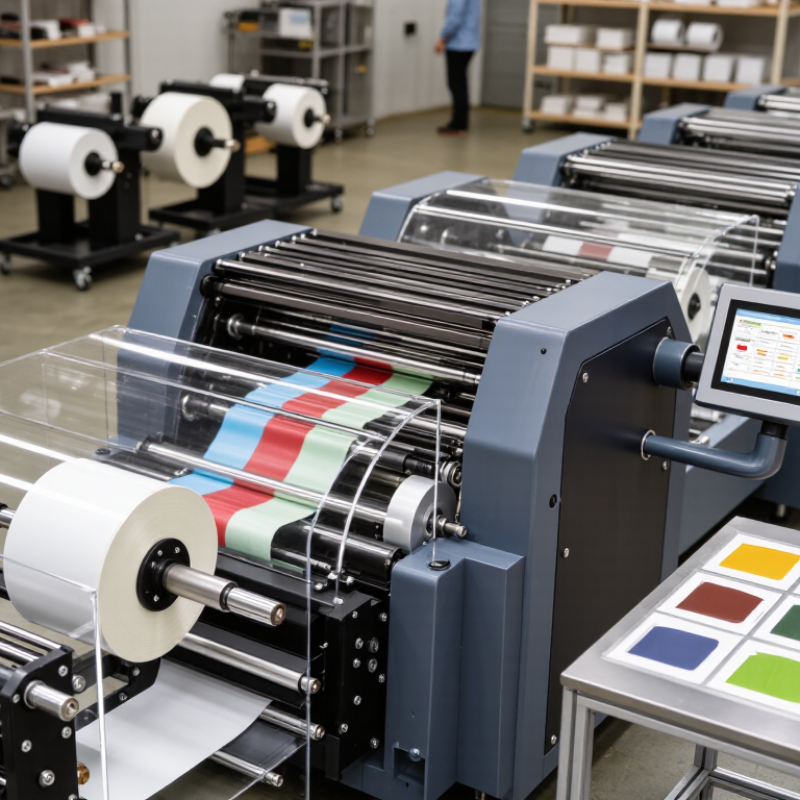
Flexo label printing machines use flexible relief plates to transfer ink onto rolls of material. An anilox roller controls ink volume with engraved cells. This small component strongly affects color density and print consistency. Operators can print on paper, film, foil, and pressure-sensitive label stock. The process supports high-speed production with relatively low material waste.
These machines serve many applications.
Food and beverage labels often need sharp text, clean color blocks, and reliable drying. Personal care labels may require smooth gradients and attractive finishes. Logistics labels usually prioritize readability, speed, and variable information. Pharmaceutical packaging demands careful registration and controlled inspection. Water-based, solvent-based, and UV-curable inks suit different substrates and production conditions. The correct choice depends on the label structure, not only the machine’s maximum speed.
From practical testing, I would examine web width, color stations, drying capacity, and registration control first.
A machine should handle the materials used every week, including thin films that can stretch during printing. Ask for a sample run with your own artwork and substrate. Check setup time, ink consumption, waste at startup, and operator access. Service training also matters. A technically advanced press can become expensive when adjustments are difficult. No machine is perfect. I have seen impressive specifications fail to reflect real production limits. A slower, stable press may produce more sellable labels than a faster machine requiring constant correction. That trade-off deserves careful review.
Assessing Label Materials, Print Requirements, and Production Volume
Choosing a flexo label printing machine starts with the label material, not the machine catalogue.
Paper, coated stock, films, and textured materials behave differently under pressure and heat. A porous paper may absorb ink quickly, while a thin film can stretch during web movement. Recycled stocks may also show uneven surfaces.
Test each material before approving a machine.
Print requirements define the machine’s practical value.
Check the required colour count, line sharpness, screen ruling, ink type, drying method, and registration tolerance. Water-based inks may need stronger drying control on non-absorbent films. Small text and fine barcodes demand stable plate pressure and accurate tension control.
Ask for a live trial using your actual substrate and artwork. Samples are useful. Real samples are better.
Production volume affects the machine’s configuration and operating cost.
Short runs may benefit from quick setup, simple plate changes, and limited material waste. High-volume work needs consistent speed, reliable drying, and automation that reduces operator adjustments. Calculate changeover time, cleaning time, spoilage, and maintenance access.
A machine that runs fast but wastes rolls may not be efficient.
I have seen specifications look impressive while setup losses were overlooked. That mistake is easy to repeat.
Measure twice.
Also review operator training, spare-part availability, and quality records before purchase.
These details often reveal whether the machine can perform reliably beyond a successful demonstration.
Evaluating Print Quality, Operating Costs, Maintenance, and Reliability
Choosing a flexo label printing machine requires more than comparing speed or purchase price. Print quality should be tested on your actual materials, not only on coated samples. Examine small text, solid areas, gradients, and barcode edges under normal production conditions. Stable registration matters when several colors meet. Ink density should remain consistent across the web, even during longer runs.
Operating costs often hide in waste, energy use, setup time, and labor. Ask how quickly operators can change plates, inks, and substrates. A fast machine may still be expensive if each job creates several hundred meters of scrap. Measure electricity consumption during printing and drying. Also check whether common parts are easy to source. Cheap components are not always economical. Sometimes they fail at the worst moment.
Maintenance access directly affects reliability. Inspect the machine with an operator, not only a salesperson. Can rollers, pumps, sensors, and drying units be cleaned without awkward tools? Clear diagnostics can reduce troubleshooting time, but software is not a substitute for practical training. Review service records, recommended maintenance intervals, and emergency support arrangements. A production trial should run long enough to reveal heat buildup, registration drift, or unstable tension. Short demonstrations can look perfect. They often hide ordinary problems. I would also leave room for doubt: supplier promises may be accurate, yet your substrates, climate, and workload can produce different results. A careful decision combines test data, operator feedback, and realistic cost calculations.
Selecting the Right Flexo Label Printing Machine for Your Business
Selecting the right flexo label printing machine starts with your business model, not its maximum speed. MarketsandMarkets’ 2024 Labels Market report values the sector at USD 53.1 billion in 2024. It forecasts USD 73.5 billion by 2029, with a 6.7% CAGR. This growth increases pressure on converters to manage short runs, varied substrates, and tighter delivery schedules. Smithers’ The Future of Global Printing to 2028 also identifies packaging applications as resilient print segments.
Define your actual production mix. Will you print coated paper, clear film, or textured stock? A five-color job on 60-micron film may need different drying control than a simple paper label. Measure average order length, repeat sizes, color requirements, and daily changeovers. Then compare usable speed, not brochure speed. Waste during setup can erase the benefit of a faster press. It happens more often than expected.
Ask operators to test representative files and materials. Inspect registration after acceleration, ink coverage near edges, and drying on dense areas. Check plate-changing time, wash-up access, energy consumption, and spare-part availability. Service response matters when a press stops during a production deadline. I would also calculate total cost over five years, including labor, waste, maintenance, and training. A spreadsheet can still miss operator fatigue. Choose the machine that fits repeatable work, not occasional peak performance.
How to Choose the Best Flexo Label Printing Machine?
Selecting the Right Flexo Label Printing Machine for Your Business
Typical narrow-web flexographic presses provide higher output as the number of printing units and web width increase. Use line speed together with substrate range, color requirements, registration control, setup waste, drying capacity, and automation when comparing machines. The values shown are representative non-brand-specific reference ranges and should be verified against the supplier’s technical specification.

 Contact immediately

 Contact Phone
 Contact Email