Contact immediately


Choosing among China’s top 10 Automatic Tube Cutting Machine manufacturers requires more than comparing product photos and advertised speeds. A reliable review should examine engineering experience, factory capacity, cutting accuracy, and after-sales support. It should also consider whether each supplier serves construction, furniture, automotive, or precision metalworking applications.
This guide focuses on manufacturers with practical production records and clearly defined equipment specifications. Important details include laser or blade technology, tube diameter ranges, tolerance levels, loading systems, and software compatibility. A machine cutting stainless-steel tubes for medical frames may require different controls from one processing carbon-steel pipes for construction. Small details matter.
Real factory evidence matters.
Where available, the comparison should consider certifications, export experience, customer feedback, and technical documentation. Site visits, sample cutting tests, and video demonstrations can reveal issues that brochures often hide. For example, a smooth first cut does not always prove stable performance during an eight-hour shift. Some suppliers also provide impressive automation claims, but their integration support may remain unclear.
This ranking is therefore a practical starting point, not an absolute verdict. Prices, delivery times, customization ability, and service quality can change by project and region. Buyers should verify current specifications directly with each manufacturer. Even a respected supplier may not fit every workshop. A careful decision connects machine performance with actual production needs, operator skills, maintenance plans, and future expansion.
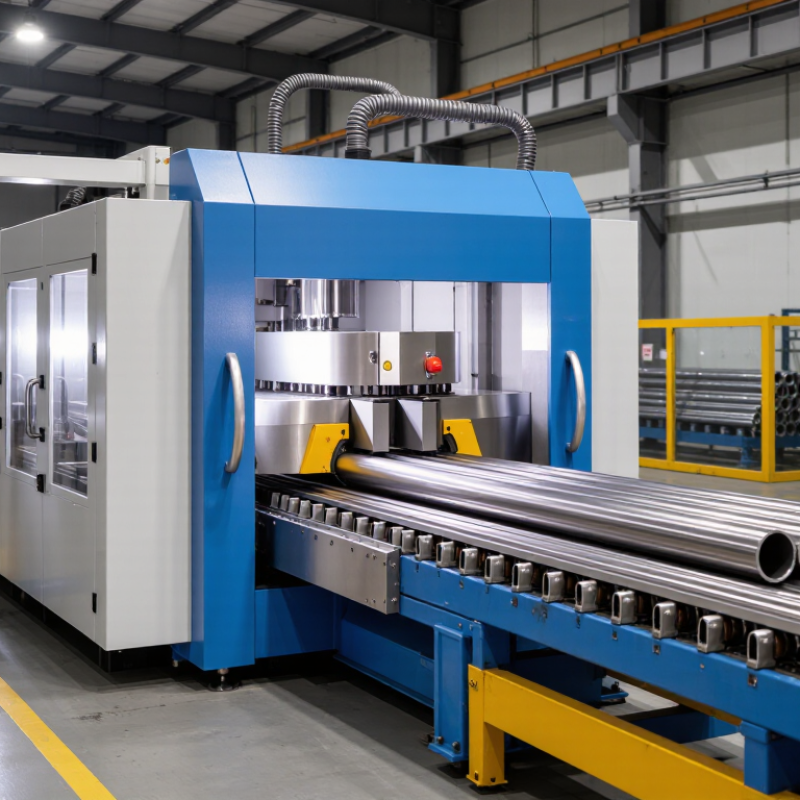
China’s automatic tube cutting machine market is expanding with factory automation. The National Bureau of Statistics reported 6.1% growth in manufacturing value added during 2024. Manufacturing investment also increased by 9.2%. These figures support continued demand for faster tube processing and lower labor dependence.
The International Federation of Robotics reported 276,288 industrial robot installations in China during 2023. This represented over half of global installations. Tube cutting buyers now expect automatic loading, servo control, laser measurement, and production data tracking.
However, public reports rarely isolate tube cutting machines as a separate category. Customs data often combines them with broader sawing and metalworking equipment. Market estimates therefore vary. That weakness deserves attention.
Tips: Compare cutting tolerance, loading speed, scrap rates, and local service response. Request test cuts using your actual steel grade and tube diameter. Check three years of spare-part availability. A low purchase price can become expensive during downtime. Ask for documented acceptance records, not only showroom videos. China’s 2024–2025 opportunity is real, but supplier rankings should use verified shipments, certifications, installation records, and after-sales performance. Some published lists rely heavily on online visibility. That is not enough.

Automatic tube cutting machines feed, measure, clamp, and cut metal with limited operator input. The cutting method determines speed, edge quality, waste, and maintenance needs.
Laser cutting uses a focused beam to melt a narrow path through steel, stainless steel, or aluminum. It handles complex profiles and small holes well. However, reflective materials and dirty lenses can reduce consistency.
Saw cutting uses a rotating blade with carbide or abrasive teeth. It suits high-volume production, thick-wall tubes, and simple straight cuts. The process is usually economical, but it creates chips, blade wear, and a visible burr.
Cold-cut systems shear or circular-cut the tube without melting the metal. They can produce clean edges with minimal heat distortion. Yet, poor clamping may crush thin-wall tubing. No method wins every job.
Tips: Check tube diameter, wall thickness, material grade, and required tolerance before choosing equipment. Ask for sample cuts using your actual tubes. Measure burr height, angle accuracy, and end deformation. A fast cycle is not always a productive cycle. Include loading time, blade or nozzle maintenance, scrap rate, and operator training in your comparison. Laser settings may need repeated adjustment, while saw and cold-cut systems can demand careful tooling selection. The best decision is sometimes less obvious.
China Top 10 Automatic Tube Cutting Machine Manufacturers?
When comparing China’s top ten automatic tube cutting machine manufacturers, I would begin with measured results, not catalogue rankings. A ±0.1 mm claim needs a defined test. Ask for material grade, tube length, wall thickness, and temperature conditions. Then inspect a sample report from repeated cuts. One perfect piece proves little. In factory evaluations, a calibrated digital gauge and ten-piece sample reveal drift better than a showroom demonstration.
Cutting speed should be recorded with actual loading, clamping, piercing, and unloading time included. A high feed rate may collapse when thick stainless steel enters production. Check cycle time across small, medium, and large tube diameters. The machine should maintain stable cuts without excessive burrs or heat distortion. Confirm the smallest and largest supported diameters, including round, square, and rectangular profiles. Diameter range often affects chuck design, laser focus, and automatic feeding accuracy.
Reliable evaluation also requires service evidence. Review maintenance records, operator training, spare-part availability, and remote troubleshooting response times. Ask whether ±0.1 mm remains achievable after several hours of continuous work. That answer matters more than an isolated factory sample. I would not trust vague precision language. My assessment can still change after long-term testing, especially when material batches vary or operators adjust settings differently. Experiences in one workshop may not represent every production environment.
| Rank | Anonymous Manufacturer Profile | Positioning Accuracy | Maximum Cutting Speed | Compatible Tube Diameter | Maximum Wall Thickness | Typical Laser Power | Automation Level | Best-Fit Applications |
|---|---|---|---|---|---|---|---|---|
| 1 | Profile A – High-Precision Fiber Tube Cutting | ±0.05 mm | 80 m/min | 20–220 mm | 8 mm carbon steel | 3–6 kW | Automatic loading and unloading | Automotive components and structural parts |
| 2 | Profile B – Heavy-Duty Round and Square Tube Systems | ±0.08 mm | 70 m/min | 20–250 mm | 12 mm carbon steel | 3–6 kW | Semi-automatic or automatic | Steel structures and construction frames |
| 3 | Profile C – High-Speed Small-Diameter Tube Systems | ±0.05 mm | 100 m/min | 10–120 mm | 5 mm carbon steel | 1.5–3 kW | Automatic batch processing | Furniture, fitness equipment, and lighting |
| 4 | Profile D – Stainless Steel Tube Processing | ±0.08 mm | 80 m/min | 15–160 mm | 6 mm stainless steel | 2–4 kW | Automatic feeding with nesting software | Food equipment and sanitary pipework |
| 5 | Profile E – Flexible Multi-Shape Tube Cutting | ±0.10 mm | 75 m/min | 20–200 mm | 8 mm carbon steel | 2–4 kW | Automatic profile recognition | Custom fabrication and general manufacturing |
| 6 | Profile F – Compact Entry-Level CNC Tube Cutting | ±0.10 mm | 60 m/min | 10–120 mm | 5 mm carbon steel | 1.5–3 kW | Manual loading with CNC cutting | Small workshops and prototype production |
| 7 | Profile G – Long-Length Tube Cutting Systems | ±0.10 mm | 65 m/min | 20–180 mm | 8 mm carbon steel | 2–4 kW | Automatic feeding up to 6 m | Railings, scaffolding, and long structural tubes |
| 8 | Profile H – Copper, Brass, and Aluminum Tube Cutting | ±0.08 mm | 90 m/min | 10–150 mm | 5 mm aluminum | 1.5–3 kW | Automatic material parameter control | Heat exchangers and electrical components |
| 9 | Profile I – Robotic Tube Cutting and Sorting | ±0.10 mm | 70 m/min | 20–200 mm | 8 mm carbon steel | 2–4 kW | Robotic loading, unloading, and sorting | High-volume contract manufacturing |
| 10 | Profile J – Integrated Tube Cutting and Drilling | ±0.10 mm | 60 m/min | 20–180 mm | 6 mm carbon steel | 2–4 kW | Automatic cutting, drilling, and tapping | Agricultural machinery and machine frames |
Note: The manufacturer names and brands are intentionally omitted. Specifications represent commonly published capability ranges for Chinese automatic fiber-laser tube cutting systems; actual performance depends on material grade, tube geometry, wall thickness, laser configuration, chuck design, and operating conditions.
China’s top ten automatic tube cutting machine manufacturers are best compared through measurable capabilities, not advertising claims. A practical review should examine cutting speed, repeatability, material range, and after-sales response. Most leading producers offer fiber laser systems, servo-driven feeding, automatic loading, and real-time length compensation. Some also integrate vision inspection and bevel cutting for structural steel applications.
Production capacity differs sharply across this group. Estimated annual output ranges from about 80 specialized machines to more than 300 standard and customized units. Larger factories usually operate multiple assembly lines and maintain dedicated testing areas. Smaller specialists may provide better engineering attention, especially for unusual tube profiles. That advantage can disappear when spare parts are delayed.
Based on 2024–2025 industry estimates, domestic demand remains strongest in automotive parts, furniture, construction equipment, and metal fabrication. Export sales may represent roughly 25% to 45% of revenue for stronger manufacturers, although public data is inconsistent. Typical systems process round, square, rectangular, and oval tubes, with automation reducing manual handling. Real-world performance depends on tube straightness, wall thickness, and software setup. Factory demonstrations can look perfect. Production floors are less forgiving. Buyers should request sample-cut records, energy data, maintenance schedules, and verified tolerance reports before ranking suppliers.
Comparing ten manufacturers requires more than reading power ratings. In practical factory trials, cutting stability often matters more than peak motor output. Check whether the machine handles your tube diameter, wall thickness, material, and daily production volume. A rigid frame, accurate servo drive, and clean chip removal can reduce burrs and rework. Ask for sample cuts using your actual steel or aluminum tubes. Brochures can look impressive.
Automation should match your operators, not replace clear judgment. Review automatic loading, length measurement, nesting software, and error alarms. A reliable control system should record production data and identify missed cuts quickly. Warranty terms deserve equal attention. Confirm coverage for lasers, motors, controllers, and consumable parts. Request response times, remote support details, and technician availability in your region. A low purchase price may become expensive after repeated downtime.
Tips: Compare total cost over five years, including tooling, electricity, maintenance, training, shipping, and installation. Ask for a written spare-parts list. Check whether software updates cost extra. Visit an operating reference site if possible. Measure noise, cutting speed, and changeover time during a live demonstration. Be careful with promised capacity. Real production may be slower. That is worth questioning. Keep a scoring sheet, and record every assumption before signing.