Top Die Cut Label Printer Options for Global Buyers?
In today's fast-paced market, the Die Cut Label Printer has emerged as a vital tool for businesses around the globe. This specialized equipment offers precise cutting and printing capabilities, catering to diverse industry needs. The right printer can elevate branding efforts and streamline production processes.
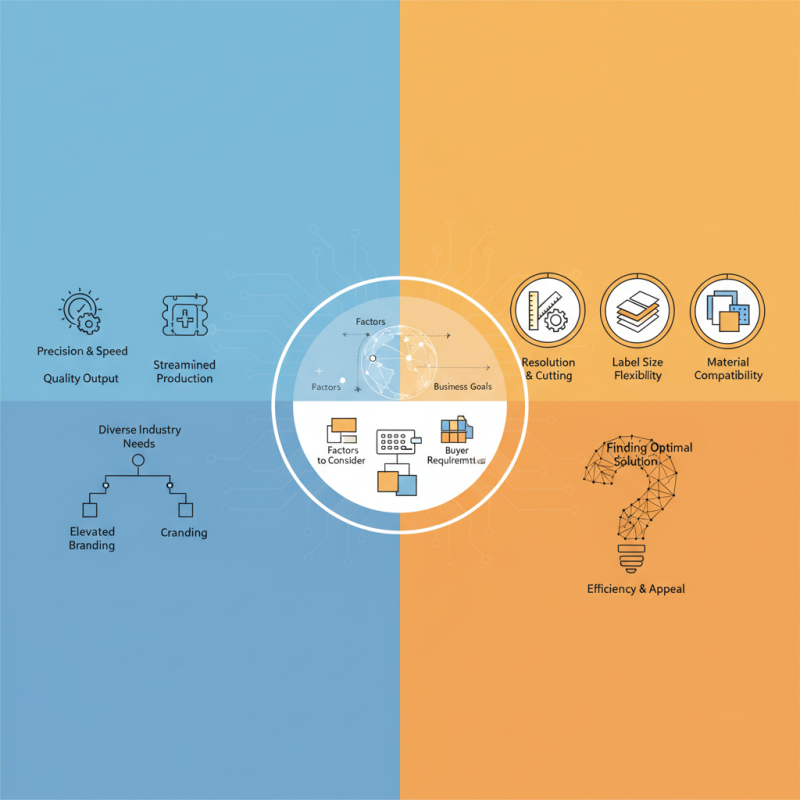
Selecting a suitable Die Cut Label Printer requires careful consideration of various factors. Users must balance quality, speed, and affordability. Not all options available will meet the high standards required for professional applications. Moreover, understanding the printer's features can sometimes be overwhelming. Key aspects such as resolution, label size flexibility, and compatibility with various materials should be prioritized.
As buyers navigate through the myriad of choices, awareness of specific requirements becomes essential. Often, brands and models will present unique advantages and disadvantages. Finding the optimal solution can be a reflective process, urging one to evaluate past experiences and specific business goals. Ultimately, the ideal Die Cut Label Printer can drive efficiency, enhance product appeal, and foster a successful branding strategy.
Overview of Die Cut Label Printing Technology
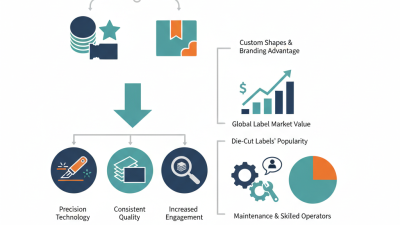
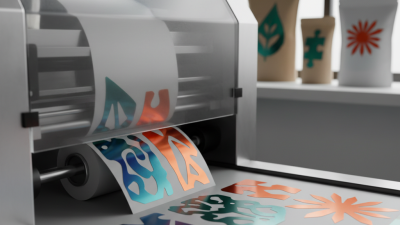
Die cut label printing technology offers a unique solution for producing custom labels. This method allows for precise shapes and intricate designs, setting it apart from traditional printing techniques. Die cutting enables the creation of labels that fit perfectly on products, enhancing brand identity. The technology can accommodate a wide variety of materials, including paper, vinyl, and synthetic substrates. This flexibility provides users with more choices for their labeling needs.
Understanding the die cutting process is essential for optimizing label production. The technology uses metal dies to cut shapes out of sheets of material, which can be both time-efficient and cost-effective for large runs. However, achieving high precision requires proper calibration and maintenance of the equipment. Misalignment or dull dies can lead to wasted materials, prompting further review of production practices. Investing in quality equipment can mitigate these issues but might come with a steeper initial cost.
Moreover, the importance of conducting thorough testing cannot be overstated. Different materials and designs may react differently during the printing process. Conducting trials can reveal potential challenges, such as ink adhesion or durability concerns. While die cut labels provide extensive creative possibilities, they also necessitate a thoughtful approach to production. Balancing innovation and practical execution is crucial in this evolving technology landscape.
Key Features to Consider When Choosing a Printer
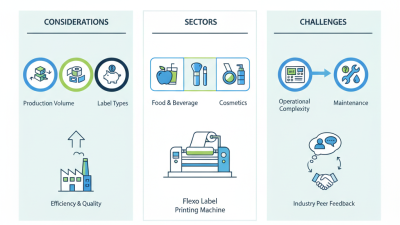
When choosing a die cut label printer, consider key features that enhance efficiency and output quality.
Print speed is crucial. Faster printers reduce production time, allowing you to meet tight deadlines.
Look for a printer that offers a balance between speed and printing precision.
Another important feature is media compatibility. Different projects may require various label materials, from paper to synthetic substrates.
Ensure the printer can handle diverse materials. This flexibility can make a significant difference in your production capabilities.
Tip: Evaluate the printer's user interface. An intuitive design speeds up the learning curve for new operators.
A user-friendly system can lead to fewer errors and better workflow.
Maintenance requirements also matter. Frequent upkeep can hinder productivity.
Seek printers with lower maintenance needs or those that offer self-cleaning functions. This aspect may not be immediately evident but is vital for long-term efficiency.
Tip: Pay attention to warranty options. A solid warranty indicates the manufacturer’s confidence in their product.
This can save you money and stress if issues arise later on.
Investment in a die cut label printer should reflect not just momentary needs but future growth potential.
Carefully weighing these features ensures a practical and reliable choice.
Comparison of Popular Die Cut Label Printer Brands
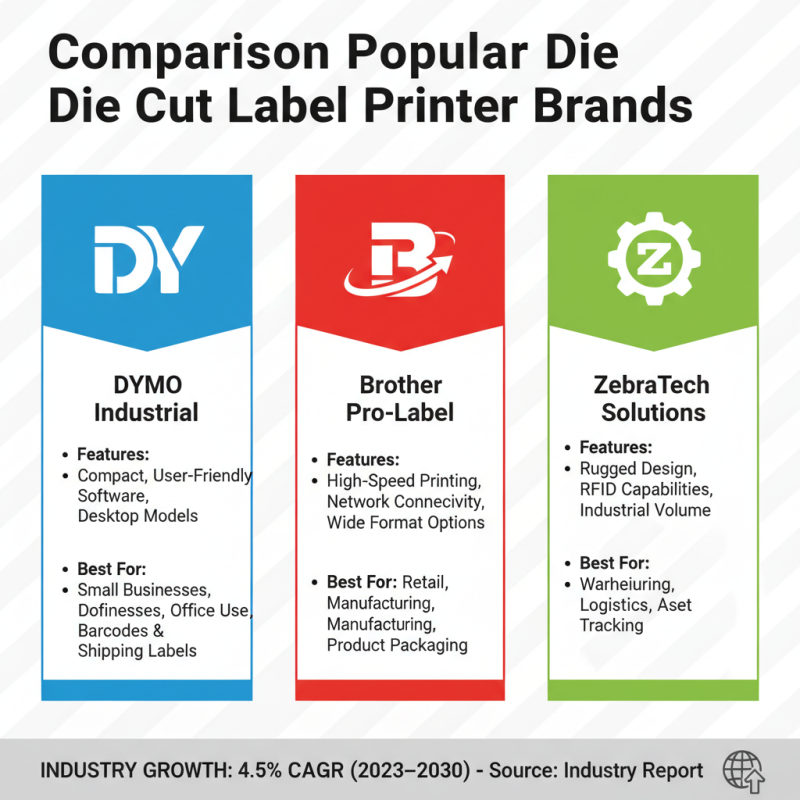
When choosing a die cut label printer, various brands dominate the market. Each brand offers unique features tailored to different business needs. According to a recent industry report, the global die cut label printer market is expected to grow at a CAGR of 4.5% from 2023 to 2030. This growth indicates a rising demand for quality labeling solutions.
Brand A is recognized for its precision and speed. Users often highlight its user-friendly interface, which reduces the learning curve. Meanwhile, Brand B emphasizes durability and quality, providing solutions for both small businesses and large enterprises. A third brand commonly noted in comparisons focuses on customization. This ability allows companies to meet specific branding requirements effectively.
However, not all choices are flawless. Some models may face challenges regarding ink efficiency. Reports suggest that a significant percentage of users have encountered unexpected downtime. This can hinder productivity and affect overall output. Feedback indicates that while features are critical, reliable post-sale support is equally important for sustained operation. Looking beyond brand names, understanding these nuances can lead to better long-term investment decisions.
Cost Analysis: Budgeting for Die Cut Label Printers
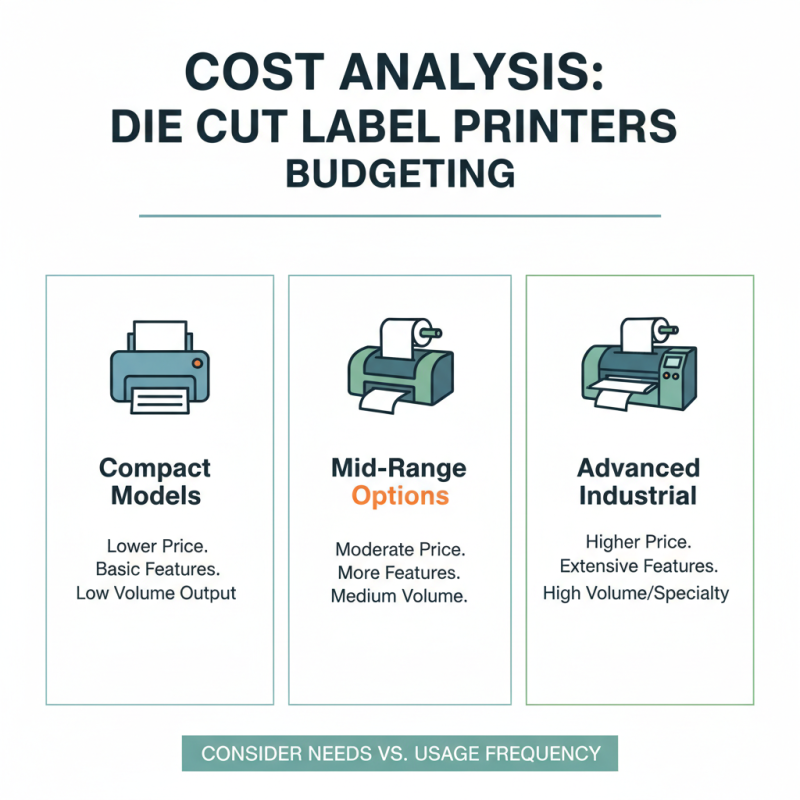
When considering die cut label printers, budgeting is crucial. Prices range significantly, influenced by printer features and capabilities. A compact model may cost less but lacks high-volume output. Advanced options come with more features, which boosts the price. Buyers need to consider their specific needs and how often they will use the printer.
Maintaining a balance between quality and cost can be challenging. Some printers may offer lower initial costs but have higher maintenance fees. It's wise to calculate potential long-term expenses. Researching and comparing models can provide insights into hidden costs. Trade-offs often arise between features and affordability, leading to tough decisions.
Finding the right solution requires careful thought. Examine your production needs closely. Some users may need robust output, while others prioritize portability. Evaluating reliability in various conditions is essential. Not all manufacturers provide clear information on their efficiency. A deep dive into customer reviews might illuminate these issues. Investing wisely ensures you get the best value for your money.
User Reviews and Ratings: Real-World Feedback on Printers
When exploring die-cut label printers, user feedback becomes invaluable. Many buyers emphasize the importance of print quality. Users often mention how crisp text and vibrant colors set certain printers apart. A few reported dissatisfaction with color accuracy. This highlights the need for potential users to thoroughly vet models before purchasing.
Another common theme in user reviews is ease of use. Many printers offer intuitive interfaces. This feature is crucial for businesses with limited staff training. However, some users encountered software issues, which can hinder productivity. A printer that is difficult to configure might lead to frustration and wasted resources.
Reliability is a top concern as well. Some printers boast consistent performance over time, while others have a mixed track record. Users frequently share stories about unexpected downtime and the impact it has on their operations. Selecting a printer with a strong reputation for durability is essential. Still, experiences can vary widely, making it important to read multiple reviews before making a decision.
Top Die Cut Label Printer Options for Global Buyers
| Printer Model |
Print Speed (labels/min) |
Max Label Width (inches) |
User Rating (out of 5) |
User Feedback |
| Model A |
25 |
4 |
4.5 |
Reliable and easy to use. |
| Model B |
30 |
5 |
4.7 |
Great print quality. |
| Model C |
20 |
3 |
4.2 |
Good for small batches. |
| Model D |
18 |
6 |
4.0 |
User-friendly with decent features. |
| Model E |
35 |
5 |
4.8 |
Excellent performance for high volume. |

 Contact immediately

 Contact Phone
 Contact Email