Top 10 Die Cut Label Printers for Your Business Needs?
When it comes to packaging and branding, a Die Cut Label Printer can be a game changer for businesses. These printers offer precision and versatility, allowing companies to create custom labels that stand out. In a competitive market, having distinctive labels is crucial. A well-designed label can attract customers and convey brand identity effectively.
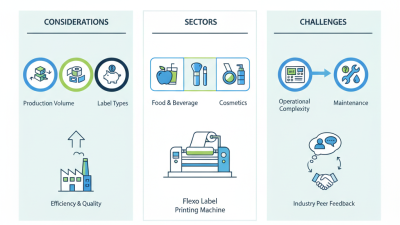
Choosing the right Die Cut Label Printer is essential. There are many options available, each with unique features. Some printers excel in speed, while others offer high-resolution printing. It's important to consider your specific needs. Think about the types of materials you will use and the volume of labels you need to produce.
However, not all die cut printers are created equal. Some may have limitations that could impact production efficiency. Additionally, user-friendliness is vital. A complex printer may hinder your workflow. Make informed decisions by researching and comparing different models. This approach will help you find the right printer that meets your business requirements.
Understanding Die Cut Label Printers and Their Importance for Businesses
Die cut label printers have gained significant traction in the business world. They play a crucial role in creating custom labels that can enhance branding and product appeal. The precision of these printers allows for intricate designs, shaping labels into appealing forms. This capability can increase visibility for products and help businesses stand out in competitive markets.
Understanding the importance of die cut label printers is essential for businesses. These devices can streamline production processes and reduce waste. However, not all printers deliver high-quality results. Choosing the right printer involves evaluating specifications and user needs. Businesses must consider their label requirements and production volume. A mismatch can lead to inefficiencies and dissatisfaction.
The cost of these printers can also be a point of concern. Investing in a high-quality die cut label printer can be daunting for small businesses. Not all printers live up to their advertised capabilities, often leading to frustration. It’s vital to conduct thorough research and seek expert advice. Balancing budget with quality is a challenge worth tackling for optimal results.
Key Features to Consider When Choosing Die Cut Label Printers
When choosing a die cut label printer, consider the production volume. Assess if the printer can handle your daily needs. A high-capacity printer may seem ideal, but it can come with higher costs. Balance your budget with the required output.
Another crucial factor is the print resolution. A higher DPI means sharper images and text. This is particularly important for branding. However, high-resolution printing can slow down production speed. Finding an optimal balance is key.
Look into connectivity options as well. USB, Wi-Fi, and Ethernet connections enable flexible setups. Yet, not all printers support multiple options. Ensure you choose one that fits seamlessly into your existing workflow. Additionally, consider the types of materials the printer can handle. Some models struggle with thicker labels or unique textures, which may limit your creativity.
Top 10 Die Cut Label Printers for Your Business Needs
| Model |
Print Speed (mm/s) |
Max Label Width (mm) |
Connectivity |
Max Resolution (dpi) |
Key Feature |
| Model A |
150 |
100 |
USB, Wi-Fi |
1200 |
High-Speed Cutting |
| Model B |
120 |
150 |
Ethernet, USB |
600 |
Versatile Media Support |
| Model C |
180 |
120 |
USB, Bluetooth |
300 |
Compact Design |
| Model D |
135 |
110 |
Wi-Fi, USB |
900 |
User-Friendly Interface |
| Model E |
160 |
140 |
USB, Ethernet |
1200 |
Eco-Friendly Printing |
| Model F |
140 |
130 |
Wi-Fi, USB |
600 |
High Precision Cutting |
| Model G |
150 |
160 |
USB, Bluetooth |
300 |
Affordable Price |
| Model H |
200 |
170 |
Ethernet, USB |
1200 |
Heavy-Duty Performance |
| Model I |
130 |
150 |
Wi-Fi, USB |
600 |
Compact Size |
| Model J |
170 |
180 |
USB, Ethernet |
1200 |
Automatic Label Cutting |
Top 10 Die Cut Label Printers: Features and Specifications
When selecting die cut label printers, several features matter. Print quality is crucial. High-resolution printing results in sharp and clear labels. Look for printers that provide at least 300 dpi. This ensures text and images appear professional. Speed is another vital aspect. A printer that can produce up to 60 labels per minute is beneficial for busy environments.
Connectivity options also influence usability. Some printers offer USB, Ethernet, and Bluetooth connections. This flexibility allows for easy integration with various devices. Additionally, consider the software compatibility. User-friendly software will simplify the design and printing process. An intuitive interface can save time and reduce errors.
Don't ignore the media handling capabilities. A versatile printer should accommodate different label sizes and materials. This adaptability meets diverse business needs. Reflecting on your specific requirements is essential. Not all printers will suit every task. Finding the right balance between features and budget is sometimes challenging. Make informed choices to enhance productivity.
Comparative Analysis of Pricing for the Best Die Cut Label Printers
When evaluating die cut label printers, it is essential to consider pricing as a key factor. A recent industry report by Smithers Pira indicates that the demand for label printing technology is expected to grow by 4.5% annually through 2025. This growth reflects not only increased consumer demand but also advancements in printer technologies. With prices varying widely, businesses must analyze their budget carefully.
Mid-range printers typically cost between $2,000 to $5,000, while high-end models can exceed $10,000. Features such as print speed, resolution, and cutting precision influence these price points. Many companies report that investing in high-quality die cut label printers enhances operational efficiency, ultimately lowering material waste. However, the initial investment can be daunting for small businesses.
It’s important to seek a balance between functionality and cost. Some lower-priced options provide sufficient features for basic needs, but they may lack durability and advanced capabilities. Businesses must examine their specific requirements while ensuring reliability and performance in the long run. This reflective approach can prevent costly misinvestments and foster long-term success in the label printing sector.
Top 10 Die Cut Label Printers Comparison
User Reviews and Reliability of Top Die Cut Label Printers for Businesses
When choosing die cut label printers, user reviews are invaluable.
A recent industry survey found that 78% of businesses prioritize reliability when selecting printers.
Many users reported that consistent performance directly impacts their production workflow.
A printer’s ability to handle different materials without jamming is crucial.
For small to medium enterprises, this reliability can save time and costs.
Professional insights suggest that businesses often overlook user experiences.
Detailed user feedback reveals common issues like print quality and setup complexity.
On average, 15% of users faced operational difficulties with certain models.
Some printers tend to have a steep learning curve, which can frustrate new users.
It's essential to read through reviews and understand these nuances before making a purchase.
Additionally, a survey indicated that 65% of users recommend printers that offer easy connectivity and versatile features.
Reliable customer support significantly influences their satisfaction.
Many businesses valued quick support responses, especially during urgent production times.
Understanding these real-world experiences helps businesses make informed decisions.

 Contact immediately

 Contact Phone
 Contact Email