 Contact immediately
Leave Your Message
-
Contact WhatsApp

-
 Contact Phone
 -
 Contact Email
The search for the top Die Cut Printer in 2026 begins with a practical question: what does “top” actually mean?
A packaging converter may value registration accuracy. A short-run label producer may prioritize setup speed and low waste. A retail team may need clean edges on textured paper, film, or adhesive stock. One machine rarely wins every test.
Industry data supports this growing complexity. Smithers’ research on digital print for packaging highlights continued investment in shorter runs, faster versioning, and customized production. Its market outlook also shows that digital packaging print is moving beyond prototypes and entering regular commercial workflows. That shift increases pressure on finishing equipment.
FINAT Radar reports that European label demand has faced uneven conditions, including inventory correction and changing customer volumes. Therefore, flexible die cutting can matter as much as press speed. A printer that changes jobs quickly may outperform a faster machine sitting idle.
In real production, the details are visible. Watch the waste strip after a 500-label run. Check whether small corners lift. Measure registration across the sheet. Listen for feeding errors during long shifts. These observations often reveal more than a brochure.
This guide compares leading Die Cut Printer options through accuracy, substrate compatibility, automation, service support, software, throughput, and total ownership cost. A neat ranking can still mislead. My judgment may favor production consistency over headline speed, and that deserves reflection.
The strongest choice depends on application, budget, operators, and expected growth. Evidence matters. So does experience.
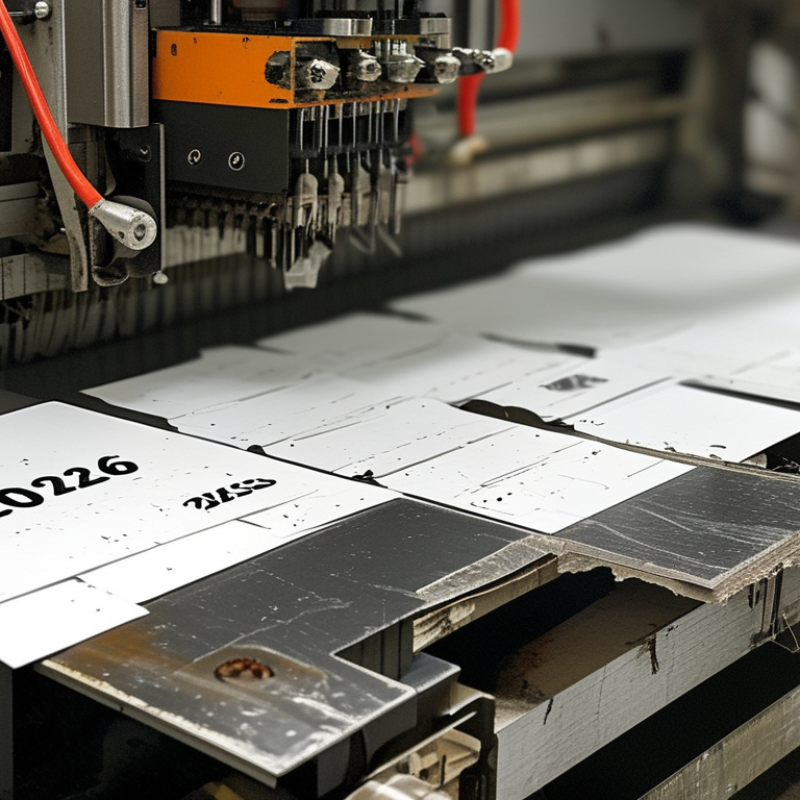
A die cut printer in 2026 is a digital printing system combined with precision cutting. It produces labels, packaging mockups, decals, cards, and shaped marketing materials. Unlike a standard printer, it can follow an outline instead of stopping at a rectangular edge. Some systems print and cut in one workflow. Others use a printer and a separate digital cutter.
The process starts with vector artwork and a defined cut path. The printer lays down ink or toner on paper, film, adhesive stock, or lightweight board. Registration marks help optical sensors match the printed image with the cutting file. A controlled blade then performs a kiss cut, full cut, crease, or perforation. Software adjusts pressure, speed, and blade depth for each material. The operator should test a small sheet before running a full batch. Test it first. Small errors matter.
A strong die cut printer in 2026 should offer accurate registration, stable color, flexible media handling, and repeatable cutting. Automatic calibration can reduce waste, but it cannot replace inspection. Dust, curling, and dense artwork still affect results. Not flawless. In my view, reliability matters more than impressive speed claims. Check edge quality, software control, service documentation, and long-run consistency before choosing equipment. The right choice depends on material, shape complexity, production volume, and required finish.
| Die-Cut Printer or System Type | Best Use | Compatible Materials | Typical Working Format | Typical Operating Speed | Typical Cutting Accuracy | Setup and Waste | Key Consideration |
|---|---|---|---|---|---|---|---|
| Integrated Print-and-Cut System | Short-run labels, stickers, decals, prototypes, and personalized packaging | Self-adhesive films, coated papers, synthetic labels, vinyl, and light cardstock | Roll-fed media, commonly 330–1,600 mm wide | Approximately 5–30 m²/h, depending on print quality, media, and cutting complexity | Typically within approximately ±0.5–1.0 mm under stable operating conditions | Minimal tooling; variable data and contour-cut files can be changed digitally with little setup waste | Usually slower for very large production runs than dedicated printing and finishing lines |
| Flatbed Digital Cutting System | Packaging samples, point-of-sale displays, signage, cartons, and sheet-based products | Cardboard, corrugated board, foam board, plastic sheets, paperboard, and textiles | Commonly from approximately 600 × 900 mm to 1,600 × 3,200 mm | Approximately 10–100 m²/h, depending on tool changes, material thickness, and cut complexity | Often approximately ±0.2–0.5 mm when material registration is controlled | No physical die required; digital files reduce tooling cost and are suitable for one-off or short-run work | Requires a flat work area and may need manual loading, unloading, or sheet alignment |
| Roll-to-Roll Digital Cutting System | Long runs of labels, decals, banners, floor graphics, and flexible packaging | Vinyl, adhesive films, paper rolls, polyester films, and flexible laminates | Commonly 300–1,600 mm web width | Approximately 10–60 m²/h, influenced by web tension, registration, and cut density | Typically approximately ±0.5–1.0 mm with optical or printed registration marks | Continuous feeding supports high productivity and reduces sheet handling; waste depends on nesting and spacing | Less suitable for rigid boards, thick substrates, or products requiring deep structural cuts |
| Laser Die-Cutting System | Intricate labels, fine detail, perforations, kiss cuts, and variable-shape production | Paper, film, adhesive labels, thin laminates, and selected synthetic substrates | Sheet or roll-fed formats; commonly up to approximately 1,600 mm web width | Approximately 10–100 m²/h, depending heavily on material, thickness, and design detail | Often approximately ±0.1–0.3 mm in controlled production conditions | No physical die and no blade replacement; digital shape changes are fast, with minimal tooling waste | Heat can discolor, melt, or leave an edge mark on some materials; ventilation is required |
| Steel-Rule Die-Cutting Line | High-volume cartons, labels, folders, tags, and repeatable packaging shapes | Paperboard, corrugated board, labels, leather, gasket materials, and thin foams | Sheet-fed formats commonly around 500 × 700 mm to 1,000 × 1,400 mm | Approximately 2,000–8,000 sheets/h, depending on equipment and substrate | Commonly approximately ±0.2–0.5 mm when the die and material are properly maintained | Requires a custom physical die, make-ready time, and an initial tooling investment; efficient at larger volumes | Less economical for frequent design changes, prototypes, and very short runs |
| Rotary Die-Cutting System | Continuous production of labels, medical materials, tapes, and flexible packaging components | Paper webs, films, foils, adhesive stocks, and flexible laminates | Roll-fed web widths commonly from approximately 200–1,000 mm | Approximately 30–150 m/min, depending on die design, material, and registration requirements | Often approximately ±0.1–0.3 mm with stable web control and registration | Very efficient for repeat orders; requires a dedicated rotary tool and setup for each shape | High tooling and changeover costs make it less flexible for variable shapes or small quantities |
| Hybrid Print, Laminate, and Cut Workflow | Commercial graphics, premium labels, packaging decoration, and customized short-to-medium runs | Coated paper, films, laminates, adhesive stocks, synthetic papers, and specialty media | Roll-fed or sheet-fed, depending on the connected modules | Approximately 5–40 m²/h for variable-data workflows; finishing stages may determine final output | Typically approximately ±0.3–1.0 mm across print, registration, and cutting stages | Combines multiple operations and can reduce handling, but calibration and workflow configuration are important | Higher purchase cost and greater process complexity than a stand-alone printer or cutter |
| Performance figures are typical industry ranges rather than guaranteed specifications. Actual results depend on substrate thickness, ink or toner technology, blade or laser settings, artwork complexity, registration marks, operator skill, and maintenance. For most short-run and highly customized work, a digital integrated or flatbed system is generally the most flexible choice; for repeat high-volume work, rotary or steel-rule die cutting is usually more productive. | |||||||