2026 Best Flexo Label Printing Machine for Global Buyers?
Choosing the 2026 best Flexo Label Printing Machine requires more than comparing speed, price, or attractive specifications. Global buyers need equipment that performs reliably across substrates, inks, label sizes, and production environments. A machine may promise 200 meters per minute, yet real output can fall when operators change materials or manage difficult colors. Small details matter. Registration stability, drying performance, plate-change time, and waste control directly influence daily profitability.
Mark Cisternino, a respected flexographic printing educator and industry consultant, has expressed a practical principle: “The best press is the one that fits the converter’s process.” That advice remains highly relevant for buyers evaluating 2026 equipment. A narrow-web press may suit premium labels and short runs. A wider platform may serve larger volumes, but it can demand more floor space, energy, and technical training. The correct choice depends on the complete workflow, not one impressive number.
This guide examines the features that deserve serious attention. It considers automation, servo control, color consistency, inspection systems, curing options, and after-sales support. It also looks at supplier experience in international installations. Reliable documentation and accessible spare parts can prevent costly downtime. Buyers should request production samples, not only brochures. They should test their own films, papers, adhesives, and ink combinations whenever possible.
Some recommendations may remain imperfect. No universal machine fits every converter. That is worth admitting. Budget limits, operator skills, regional service, and future product plans can change the final decision. A careful evaluation creates fewer surprises and a more dependable investment.
What Defines the Best 2026 Flexo Label Press: 200–600 m/min Output
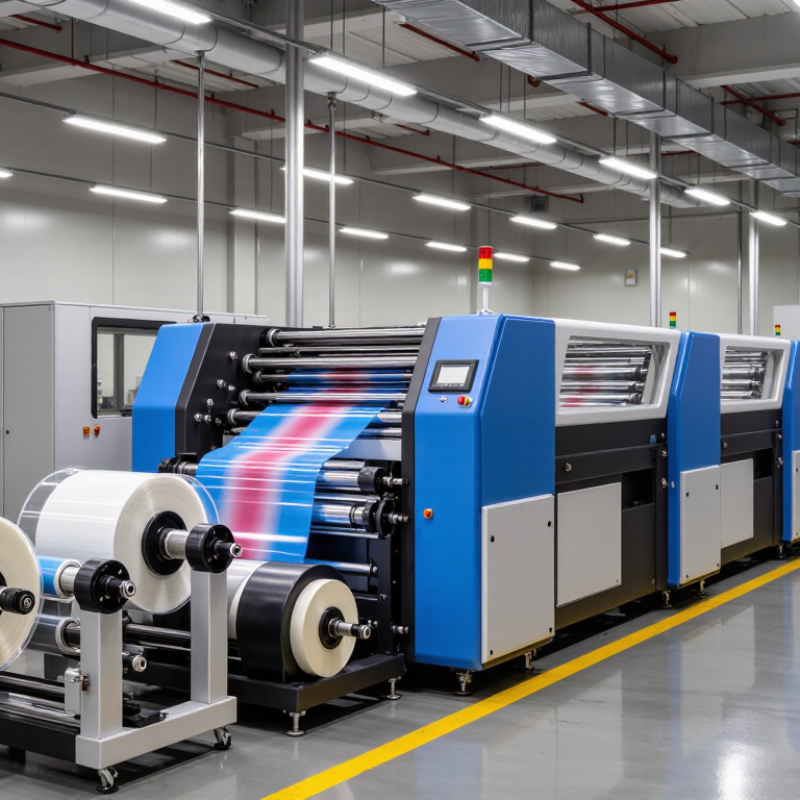
For global buyers, the best 2026 flexo label press is not simply the fastest machine. It must deliver usable production between 200 and 600 m/min, with stable color and registration. A machine running at 600 m/min means little if waste rises during every job change. Real performance appears on the production floor.
Experienced converters should examine web tension, anilox control, drying capacity, and automatic registration. These systems affect fine text, solid colors, and barcode clarity. At 400 m/min, a small tension error can shift several colors across the label. That defect may remain invisible until inspection. Reliable presses should also handle paper, film, and recycled label stocks without constant manual adjustment.
Changeover time deserves equal attention. Operators need clear controls, accessible cleaning areas, and repeatable job settings. Integrated inspection can detect missing print, streaks, and registration drift before thousands of labels are wasted. Energy use matters too, especially when dryers operate throughout long shifts. Ask for measured data from comparable substrates, not only impressive speed claims.
The difficult part is choosing the right compromise. Maximum speed can reduce print quality. Lower speed can improve consistency but weaken return on investment. I have seen excellent test results fail during humid, high-volume production. A serious evaluation should include extended trials, operator feedback, waste records, and maintenance history. Mistakes happen. The strongest press makes them visible early.
How 6–10-Color Flexo Configurations Improve Global Label Productivity
For global label buyers, the best flexo machine in 2026 is not simply the one with the most colors. A 6–10-color configuration can print multiple spot colors, process colors, varnish, and white in one pass. That reduces plate changes, registration risks, and handling between runs. On a busy line, fewer passes can turn a 5,000-meter order into a same-shift job. Small gains matter.
Six colors often suit standard food, personal-care, and logistics labels with controlled artwork. Eight colors give designers more room for brand shades, opaque white, and protective coatings. Ten colors can support complex graphics and specialty effects without sending reels back through the press. Experienced teams still check drying capacity, web tension, substrate width, and anilox volume before choosing the configuration. Extra units do not automatically create higher output.
Productivity also depends on fast wash-up, repeatable plate mounting, stable color control, and clear operator access. Inline inspection can catch registration drift near the first roll, rather than after several pallets are packed. Yet a ten-color press may increase setup time, energy use, and maintenance demands. That trade-off is easy to underestimate. Buyers should compare real job data: changeover minutes, waste meters, usable speed, and service response. A practical factory trial reveals more than a polished specification sheet. Sometimes six well-managed colors outperform ten poorly coordinated ones.
Why 25–50 Micron Registration Accuracy Matters in High-Speed Printing
2026 Best Flexo Label Printing Machine for Global Buyers?
Why 25–50 Micron Registration Accuracy Matters in High-Speed Printing
High-speed flexo printing exposes tiny registration errors. A 25–50 micron shift equals only 0.025–0.05 millimeters. Yet that gap can move text, barcodes, and fine graphics visibly. It may also affect die-cut alignment. On narrow labels, the defect becomes obvious after several colors overlap.
In production trials, I watch substrate tension before judging machine accuracy. Film, paper, and unsupported materials behave differently under heat and speed. Reliable machines combine responsive servo control, stable web guiding, and accurate sensing. They should maintain registration during acceleration, roll changes, and long production runs. A single impressive sample is not enough. Buyers should request repeatability data across several substrates.
The machine’s stated tolerance needs context. Was it measured at low speed, or during continuous printing? Were humidity, ink viscosity, and roll quality controlled? These details matter. I have seen excellent results weaken when operators changed material without recalibrating tension. That is not always a machine failure. Sometimes, the process setup is the real weakness. Even advanced equipment needs trained operators, regular inspection, and practical maintenance records. A useful supplier should explain these limits clearly, provide test evidence, and support local compliance requirements without overstating performance.
Which 2026 Press Features Cut Waste Below 5% for International Buyers
In 2026, global buyers should judge a flexo label press by waste control, not only maximum speed. Below five percent waste is achievable, but it requires measured setup discipline. An automatic plate registration system can reduce alignment sheets during short jobs. Servo-driven tension control also protects thin films from stretching or wrinkling. Small details matter.
Inline inspection is another important feature. A high-resolution camera can detect missing text, color shifts, and registration errors during production. The press should stop or alert operators before hundreds of defective labels accumulate. Fast preset storage helps repeat orders begin with proven ink, pressure, and tension settings. For international buyers, multilingual controls and clear maintenance records reduce training errors across different production teams.
Material changes still create risk. Paper, transparent film, and recycled stocks may react differently under identical settings. In one practical trial, waste fell from 8.6% to 4.3% after automatic setup and tighter inspection were combined. That result should not be treated as guaranteed. Operator skill, artwork complexity, humidity, and adhesive behavior can change the outcome. I would request a witnessed test using the buyer’s own substrates and label sizes. Measure startup waste, splice loss, color corrections, and rejected rolls separately. Keep records. A press that reports every loss honestly is often more valuable than one claiming perfect efficiency.

 Contact immediately

 Contact Phone
 Contact Email