 Contact immediately
Leave Your Message
-
Contact WhatsApp

-
 Contact Phone
-
 Contact Email
Choosing the best Automatic Cnc Machine for sale is not simply a matter of comparing spindle speed or sticker price. A machine may cut aluminum quickly, yet struggle with steel, tight tolerances, or overnight production. The right choice depends on your materials, part dimensions, workload, operator skills, and service access.
Market evidence shows why this decision matters. Fortune Business Insights valued the global CNC machine market at approximately USD 88.57 billion in 2023. Its report projects continued growth through 2030, driven by automation, precision manufacturing, and labor shortages. Deloitte’s 2024 smart manufacturing survey also found that many manufacturers consider digital production essential for future competitiveness. However, growth figures do not guarantee a profitable purchase.
John Saunders, founder of NYC CNC, has repeatedly emphasized a practical buying principle: “The best machine is the one that makes you money.” That idea deserves careful attention. A lower-cost Automatic Cnc Machine can become expensive after tooling, installation, training, software, maintenance, and downtime. Conversely, a premium machine may be wasteful for simple prototypes or occasional jobs.
This guide compares machine types, control systems, working envelopes, spindle performance, accuracy, automation features, and ownership costs. It also examines vendor support, warranty terms, and real production conditions. A perfect machine does not exist. The best machine fits the work. Even experienced buyers can misjudge future demand, so flexibility and measurable return on investment should guide the final decision.
What Is an Automatic CNC Machine?
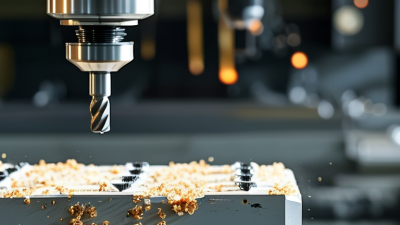
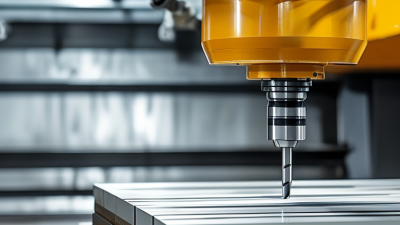
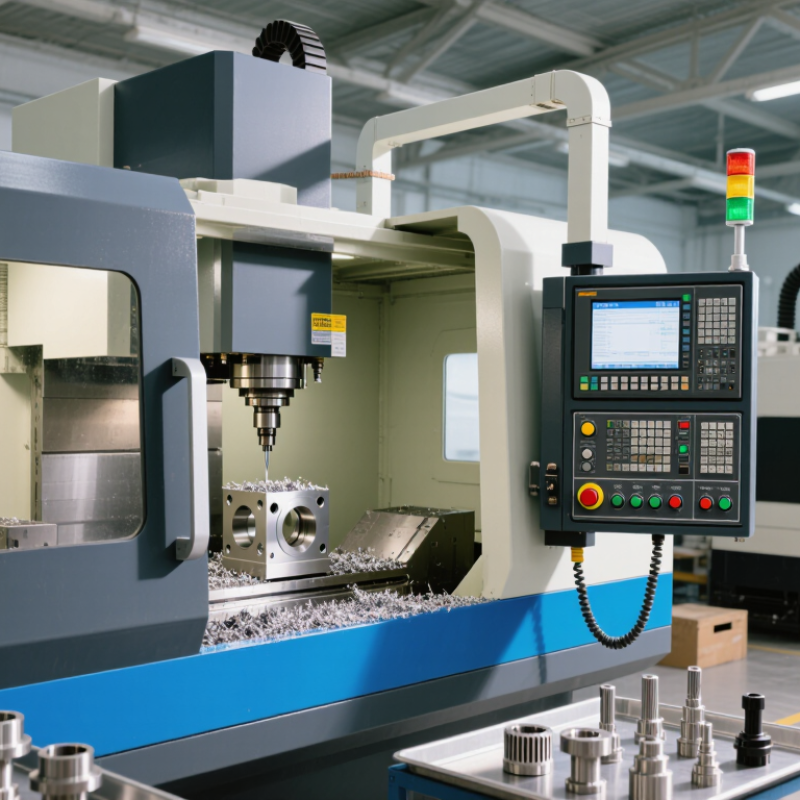
An automatic CNC machine uses computer instructions to control cutting, drilling, milling, or turning operations. The operator loads a digital program and secures the workpiece. The machine then follows programmed toolpaths with repeatable movement. Many models include automatic tool changers, sensors, coolant systems, and programmable workholding. This reduces manual handling and supports consistent production. However, automatic does not mean completely unattended. Material variation, tool wear, and incorrect settings can still create defects.
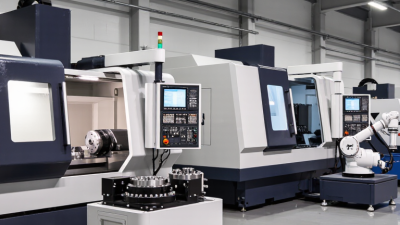
For anyone comparing an automatic CNC machine for sale, examine its working envelope, spindle speed, motor power, control system, and positioning accuracy. Match these specifications with your material and part size. A compact machine may suit small aluminum components, while a larger system may handle steel fixtures or cabinet panels. Request test-cut evidence when possible. Inspect sample surfaces, measured dimensions, and maintenance records. A machine can look impressive yet perform poorly after neglected servicing. I would also allow time for setup errors. They happen, even in experienced workshops.
Tips: Check whether the machine supports your preferred file formats and tooling. Confirm electrical requirements before delivery. Ask about operator training and spare parts. Keep tools sharp and verify offsets before each batch. Never assume the first program is perfect. Run a controlled dry test, observe unusual vibration, and adjust cautiously. Good documentation improves reliability more than impressive specifications alone.
| Automatic CNC Machine Type | How It Works | Typical Materials | Common Number of Axes | Typical Working Area or Capacity | Typical Accuracy | Automatic Features | Best For | Main Selection Considerations |
|---|---|---|---|---|---|---|---|---|
| CNC Router | Uses a rotating cutting tool to remove material from a fixed sheet, panel, or workpiece. | Wood, plastics, composites, foam, and non-ferrous metals such as aluminum. | 3 axes are standard; 4 or 5 axes are available for angled and three-dimensional work. | Often approximately 1,220 × 2,440 mm to 2,000 × 4,000 mm for sheet processing. | Approximately ±0.05 to ±0.20 mm, depending on machine construction, tooling, and material. | Automatic tool changing, vacuum hold-down, dust collection, probing, and nesting software. | Furniture, cabinetry, signs, panels, prototypes, and large-format cutting. | Choose based on table size, spindle power, vacuum capacity, rigidity, and dust control. |
| CNC Milling Machine or Machining Center | Rotating multi-edge tools cut, drill, pocket, and finish solid workpieces held in a fixture. | Aluminum, steel, stainless steel, brass, titanium, plastics, and engineering composites. | 3 axes are common; 4- and 5-axis models provide access to multiple faces and complex surfaces. | Typical travel ranges are approximately 500–1,000 mm in X, 400–600 mm in Y, and 400–600 mm in Z for general-purpose models. | Approximately ±0.005 to ±0.025 mm on well-maintained industrial equipment. | Automatic tool changer, workpiece probing, coolant systems, chip conveyors, and automatic pallet systems. | Precision metal parts, molds, fixtures, aerospace components, and repeat production. | Evaluate spindle speed and torque, rigidity, tool capacity, axis travel, control system, and service support. |
| CNC Turning Center | Rotates the workpiece while cutting tools remove material from its outside or inside diameter. | Steel, stainless steel, aluminum, brass, copper alloys, plastics, and titanium. | 2 axes are standard; live tooling, a Y-axis, or a sub-spindle can add milling and secondary operations. | Common capacities range from approximately 200–500 mm swing and 300–1,000 mm turning length. | Approximately ±0.005 to ±0.025 mm, depending on machine condition and process control. | Automatic bar feeder, turret indexing, parts catcher, live tooling, probing, and chip removal. | Shafts, bushings, threaded parts, flanges, fittings, and rotational components. | Consider maximum diameter, turning length, bar capacity, spindle power, chuck size, and tooling flexibility. |
| CNC Fiber Laser Cutter | Uses a focused laser beam to melt or vaporize sheet or tube material along programmed paths. | Mild steel, stainless steel, aluminum, brass, copper, and galvanized sheet metal. | Usually 2 linear cutting axes; tube systems may include rotary or additional motion axes. | Common sheet sizes include approximately 1,500 × 3,000 mm and 2,000 × 4,000 mm. | Approximately ±0.03 to ±0.10 mm, depending on material thickness, calibration, and thermal conditions. | Automatic focusing, nozzle changing, sheet loading and unloading, nesting, height sensing, and piercing control. | Fast, clean profiling of thin and medium-gauge metal sheet and tube. | Match laser power and gas system to material type, thickness, edge quality, and expected production volume. |
| CNC Plasma Cutting Machine | Uses a high-temperature ionized gas arc to cut electrically conductive metal. | Mild steel, stainless steel, aluminum, and other electrically conductive metals. | 2 axes are standard; bevel cutting and drilling functions add mechanical axes. | Common table sizes range from approximately 1,500 × 3,000 mm to 2,000 × 6,000 mm. | Approximately ±0.20 to ±0.50 mm for general production, depending on thickness and cutting setup. | Automatic torch height control, plate alignment, probing, nesting, and consumable monitoring. | Cost-effective cutting of medium and thick metal plate. | Consider maximum thickness, cut quality, power supply, fume extraction, consumable cost, and duty cycle. |
| CNC Waterjet Cutter | Uses a high-pressure water stream, often mixed with abrasive, to cut material without a heat-affected zone. | Metal, stone, glass, ceramics, rubber, composites, and laminated materials. | 2 axes are standard; 3-, 4-, and 5-axis heads support angled and three-dimensional cutting. | Typical cutting areas range from approximately 1,500 × 3,000 mm to 2,000 × 6,000 mm. | Approximately ±0.05 to ±0.20 mm, depending on cutting speed, head type, and material. | Automatic height sensing, abrasive delivery, nesting, taper compensation, and multi-head cutting. | Heat-sensitive materials, thick plate, stone, glass, and mixed-material applications. | Assess pump pressure, abrasive consumption, cutting speed, drainage, wastewater handling, and operating cost. |
| CNC EDM Machine | Removes electrically conductive material through controlled electrical discharges between an electrode and workpiece. | Hardened steel, carbide, tool steel, and other electrically conductive materials. | Wire EDM commonly uses 4 or 5 controlled axes; sinker EDM uses multiple programmable axes. | Work envelopes commonly range from approximately 300 × 200 mm to 800 × 600 mm, depending on model. | Approximately ±0.002 to ±0.010 mm for precision finishing operations. | Automatic wire threading, wire tension control, dielectric filtration, electrode changing, and process monitoring. | Complex dies, molds, narrow slots, hardened materials, and very fine profiles. | Consider required surface finish, cutting speed, workpiece size, dielectric maintenance, and electrode or wire cost. |
The best automatic CNC machine depends on the workpiece material, required accuracy, part size, production volume, available floor space, and desired level of automation. The performance figures shown are typical industry ranges rather than guaranteed specifications for every machine.