Contact immediately


Choosing a Slitting Rewinding Machine is not simply a matter of selecting the highest speed. The right choice depends on your material, roll dimensions, production targets, and operator experience. Film, paper, foil, labels, and laminated webs each respond differently under tension. A machine that performs beautifully on soft film may create wrinkles on coated paper.
Dr. Michael J. Roisum, a respected web-handling specialist, offers a useful principle: “Control the web before increasing speed.” That idea should guide every purchase. Examine the tension-control system, unwind stability, knife arrangement, rewind hardness, and finished-roll accuracy. Ask for a trial using your actual substrate. Bring the real core size, width range, and challenging roll structure. Brochures rarely show the ugly details.
Look closely at changeover time. Ten minutes saved per job can become several production hours each week. Check whether operators can adjust shafts, knives, and tension without awkward reaching. Inspect guarding, emergency stops, access points, and maintenance space. Safety is not an optional feature.
Do not ignore service support. A precise machine can become expensive equipment if spare parts arrive slowly. Request references from converters producing similar materials. Compare total ownership cost, not only the purchase price. Energy use, waste, training, downtime, and blade life all matter.
There is no perfect specification. Your first machine shortlist may be wrong. That is normal. Recheck assumptions with production data, sample rolls, and operator feedback. The best Slitting Rewinding Machine is the one that consistently delivers usable rolls, stable tension, and predictable results. Speed matters. Repeatability matters more.
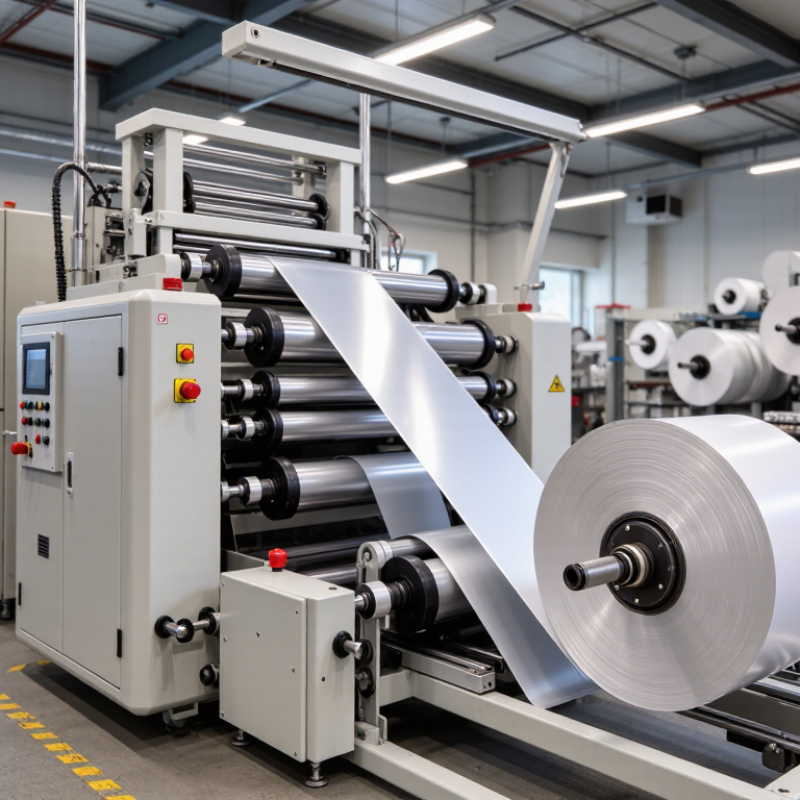
The material is the starting point. Identify whether you will process paper, film, foil, laminate, or another flexible substrate. Each material responds differently to tension, heat, and cutting pressure. Record the material’s surface finish and coating condition. A glossy film may slip more easily than an uncoated paper web. That difference affects winding stability.
Measure the full thickness, including coatings and adhesive layers. Small errors can change the finished roll diameter and tension settings. Confirm the maximum and minimum web widths before comparing machines. The usable width matters more than the advertised frame width. Also check whether the material arrives in a continuous web or contains splices. Splices require suitable detection and handling controls.
Define the finished roll specifications clearly. Note the core diameter, maximum outer diameter, roll weight, slit width, and winding direction. A production team may request narrow rolls one day and wide rolls the next. Flexible setup helps, but excessive range can increase cost and adjustment time. Think carefully here. A neat spreadsheet can still hide an unsuitable process.
Ask for trial processing with your actual material. Observe edge quality, telescoping, wrinkles, dust, and roll hardness. Measure the first and last rolls, not only the best sample. Experienced operators often reveal problems that specifications miss. Leave room for change, because future materials may be thinner, wider, or more delicate.
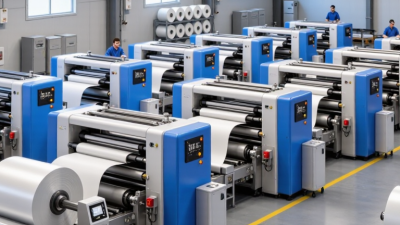
Selecting a slitting rewinding machine starts with the product, not the machine catalogue. Flexible films, laminates, paper, and foil respond differently under tension. Razor slitting suits clean, thin films at high speed. Shear slitting offers better control for thicker laminates. Score slitting can work for selected paper structures, but edge dust may become a serious issue.
Smithers’ The Future of Global Flexible Packaging to 2028 valued the global flexible packaging market at about USD 201.8 billion in 2023. This scale reflects increasingly varied substrates and narrower customer specifications. Match the slitting method to tensile strength, coating sensitivity, thickness, and required edge quality. A packaging engineer should test samples at production speed, not only on a bench. Watch the web closely. Wrinkles often appear before operators notice unstable tension.
Rewinding design matters just as much. Check shaft type, core diameter, roll hardness, maximum finished diameter, and automatic tension control. PMMI’s 2024 Global Packaging Trends report highlights automation and flexible production as continuing priorities. However, more automation cannot repair a poorly selected knife geometry. That is an easy mistake. Measure splice visibility, telescoping, dust, and roll density during trials. A useful specification records actual material behavior, including humidity changes and coating variation. No machine setting is permanently correct; even experienced teams must revisit assumptions when the substrate changes.
A slitting rewinding machine should match your material, roll width, and production rhythm. Rewinding quality comes first. Check whether the machine controls taper tension, web alignment, and roll hardness throughout the cycle. Poor taper control can create telescoping rolls, crushed edges, or loose layers near the core. These faults may appear only after storage. That is costly.
Tension control needs practical proof, not impressive specifications. Ask for test results across thin film, coated paper, and laminates. According to Smithers’ The Future of Global Flexible Packaging to 2028, flexible packaging demand will continue growing, increasing pressure for stable, high-speed converting. However, faster speed is not always better. A machine that runs quickly but causes wrinkles may reduce usable output. Review tension accuracy, dancer response, load-cell stability, and automatic deceleration. Core handling also deserves close attention. Test shaft loading, core expansion, core positioning, and finished-roll removal. A two-minute manual adjustment can become hours of lost production each week.
Tips: Bring your actual materials to the factory trial. Measure roll hardness at the outer layer and near the core. Check whether operators can change cores safely and quickly. The Flexible Packaging Association reported approximately 42.9 billion dollars in United States flexible packaging sales for 2022, showing the scale of this market. Yet every plant differs. I have seen a technically capable machine fail because its core chucks did not suit recycled-board cores. Perfect specifications are rarely enough. Leave room for operator feedback and a second test.
How to Choose a Slitting Rewinding Machine?
Choosing a slitting rewinding machine requires more than checking maximum speed. Automation should reduce manual adjustments, material waste, and operator fatigue. Automatic tension control can keep rolls firm from the first meter to the last. Recipe storage also helps operators repeat proven settings. However, excessive automation may complicate troubleshooting when sensors misread web movement. A practical interface matters more than impressive software features.
Safety must be visible during daily production. Look for guarded rotating shafts, emergency stops, and clear access controls. The machine should stop quickly when a door opens or abnormal tension appears. Operators also need training, not only warning labels. Maintenance deserves equal attention. Easy access to blades, bearings, sensors, and pneumatic parts can shorten service time. A clean machine room and documented inspection schedule prevent small faults from becoming long stoppages.
Tips: Compare actual output, not advertised speed. Ask for a trial using your film, paper, or laminate. Measure setup time, roll hardness, edge quality, noise, and waste. Check whether common wear parts are easy to replace. Watch the unwind. A machine may perform well during a short demonstration but struggle after several hours. I have found that production efficiency often depends on small details, such as shaft changes and cleaning access. A perfect specification sheet can still disappoint on the factory floor.
Comparison of typical manual, semi-automatic, and fully automatic machine configurations using a 0–100 performance index. Higher scores indicate better automation, operator safety, maintenance efficiency, and production performance.
Interpretation: Fully automatic configurations generally deliver higher production efficiency, reduced operator exposure, and more consistent output. Manual systems are usually easier to maintain but require more labor and process control.
How to Choose a Slitting Rewinding Machine?
Select a Machine Based on Budget, Support, and Future Capacity
A practical purchase starts with the material, not the machine price. Define film type, web width, thickness, roll diameter, and required output. Ask for a trial using your actual substrate and roll structure. This reveals tension problems that brochures often hide. A machine that handles today’s narrow rolls may struggle after one production upgrade.
Compare the complete cost, not only the quotation. Include knives, cores, spare sensors, installation, training, energy use, and planned maintenance. A lower-priced machine can become expensive when downtime increases. Request clear service response times and local technical support. Ask whether operators can receive hands-on training. Good support should include manuals, fault guidance, and access to commonly needed parts.
Future capacity deserves equal attention. Check whether the frame can accept wider rolls, larger rewind diameters, faster speeds, or additional automation. Modular controls may cost more now, but they can delay a full replacement. Still, overbuying creates its own waste. An oversized machine may consume floor space and capital without improving current output. A careful forecast can be wrong. Review sales plans, labor availability, and product changes with production staff before deciding. Leave room for growth, but keep the specification tied to measurable work.
| Selection Dimension | Entry-Level Configuration | Standard Production Configuration | High-Capacity Configuration | Typical Application | Key Evaluation Point | Upgrade Potential |
|---|---|---|---|---|---|---|
| Indicative Machine Budget | USD 25,000–60,000 | USD 60,000–150,000 | USD 150,000–350,000+ | Budget planning before requesting quotations | Compare the complete line scope, not only the machine price | Confirm whether controls, shafts, and inspection systems can be added later |
| Material Width | Up to approximately 1,300 mm | Approximately 1,300–1,800 mm | Approximately 1,800–3,000 mm | Film, paper, foil, laminate, and coated web processing | Choose a working width that matches current roll sizes and planned products | Allow a practical width margin for future product expansion |
| Maximum Unwinding Diameter | 600–800 mm | 800–1,000 mm | 1,000–1,500 mm | Small, medium, and high-volume parent rolls | Check whether the loading method suits available handling equipment | A larger unwinding diameter can reduce roll-change frequency |
| Maximum Rewinding Diameter | 400–600 mm | 600–800 mm | 800–1,200 mm | Labels, flexible packaging, industrial films, and paper rolls | Match finished-roll diameter to customer requirements and core strength | Use interchangeable shafts or differential winding technology where needed |
| Typical Operating Speed | 150–300 m/min | 300–600 m/min | 600–1,000 m/min | General-purpose converting and higher-volume production | Actual output depends on material, slit width, roll diameter, and operator skill | Choose a drive and tension system that can support future speed increases |
| Suitable Material Thickness | Commonly 12–150 microns | Commonly 8–200 microns | Commonly 5–300 microns | Flexible films, laminates, foil, paper, and specialty webs | Verify tension stability and web-path compatibility for the thinnest material | Consider additional tension-control zones for a wider material range |
| Slitting Method | Razor or basic shear slitting | Shear, razor, or crush slitting | Servo-controlled shear and specialized slitting systems | Different materials require different blade principles | Ask for sample trials using the actual material and target slit width | Use modular blade holders to accommodate new products |
| Tension Control | Basic dancer or load-cell control | Closed-loop load-cell control | Multi-zone automatic tension control | Quality-sensitive winding and thin-web processing | Stable tension helps prevent wrinkles, telescoping, and loose edges | Servo drives and additional control zones can support more demanding materials |
| Automation Level | Manual setup and recipe entry | Motorized setup with touchscreen recipes | Automatic positioning, roll change, inspection, and production reporting | Operations ranging from flexible batch work to continuous production | Evaluate setup time, labor availability, and changeover frequency | Reserve space and communication ports for automation modules |
| Operator Requirement | One trained operator plus material handling support | One trained operator for normal production | One operator with technical support during setup and maintenance | Production environments with different staffing levels | Request training for setup, blade adjustment, tension, and fault recovery | Remote diagnostics and recipe management can reduce dependence on specialists |
| Technical Support | Remote troubleshooting and standard spare-parts package | Remote support, commissioning, and scheduled service options | Commissioning, preventive maintenance, process training, and priority service | Companies with different levels of in-house maintenance capability | Confirm response times, technician availability, manuals, and electrical documentation | Choose a supplier able to support additional modules and future line integration |
| Estimated Installation Period | Approximately 1–3 days after delivery | Approximately 3–7 days after delivery | Approximately 1–3 weeks, depending on integration | Production scheduling and factory preparation | Check floor loading, power supply, compressed air, ventilation, and access routes | Plan utilities and floor space for future equipment expansion |
| Best Fit by Business Stage | New converters, trial production, and low-volume orders | Growing converters with recurring orders and multiple materials | Established producers with high utilization and strict delivery targets | Matching investment level to realistic demand | Base the decision on forecast utilization, not only maximum speed | Prioritize a modular platform when demand is expected to increase |
| Main Advantages | Lower initial investment, simpler operation, and easier maintenance | Balanced productivity, flexibility, and operating cost | High output, reduced manual handling, and advanced quality control | Comparing total operational value | Calculate labor, waste, downtime, energy, and maintenance costs over time | Higher initial investment may be justified when utilization is consistently high |
| Main Trade-Off | Lower speed, more manual work, and limited automation | Higher purchase cost and more complex maintenance | Highest capital cost, installation demands, and operator training needs | Risk assessment before purchase | Do not pay for capacity that cannot be supported by orders and infrastructure | Compare the cost of future upgrades with the cost of buying capacity initially |
| Recommended Decision Rule | Choose when expected utilization is below approximately 50% and product requirements are stable | Choose when utilization is approximately 50–75% and product variety is increasing | Choose when utilization is above approximately 75% or rapid growth is expected | Practical capacity planning | Use confirmed order volume, shift pattern, changeover time, and target waste rate | Review the plan every 12–24 months as products and order volumes change |