inquiry
Leave Your Message

7 Tips for Choosing the Right Slitting Unit?

Choosing the right Slitting Unit starts with the material, not the machine brochure. A 2024 Grand View Research report estimated the global flexible packaging market at about $263.4 billion in 2023, with continued growth projected through 2030. That scale matters on the factory floor: more converting work means more pressure to maintain line speed, edge quality, and reliable changeovers. But market growth alone cannot tell you which unit fits your operation.

A useful rule from slitting practice is simple: “A clean slit begins with a stable web.” This is a practical guiding principle, not a quotation attributed to a named expert. I could not verify a published, named specialist’s quotation for this introduction, and inventing one would be misleading. Instead, evaluate the details you can measure: substrate type and thickness, target widths, rewind quality, tension control, blade setup, and operator access. Watch the web travel across the rollers. Check for edge dust, wrinkles, and telescoping rolls.

Small details matter. A fast machine may still be the wrong choice if setup takes too long or narrow rolls wander during rewinding. The following seven tips will help compare Slitting Unit options against real production needs, supplier support, and future capacity. Treat the checklist as a starting point; actual trials may reveal issues that specifications miss.
7 Tips for Choosing the Right Slitting Unit?

Define the Slitting Unit’s Role in Your Production Process

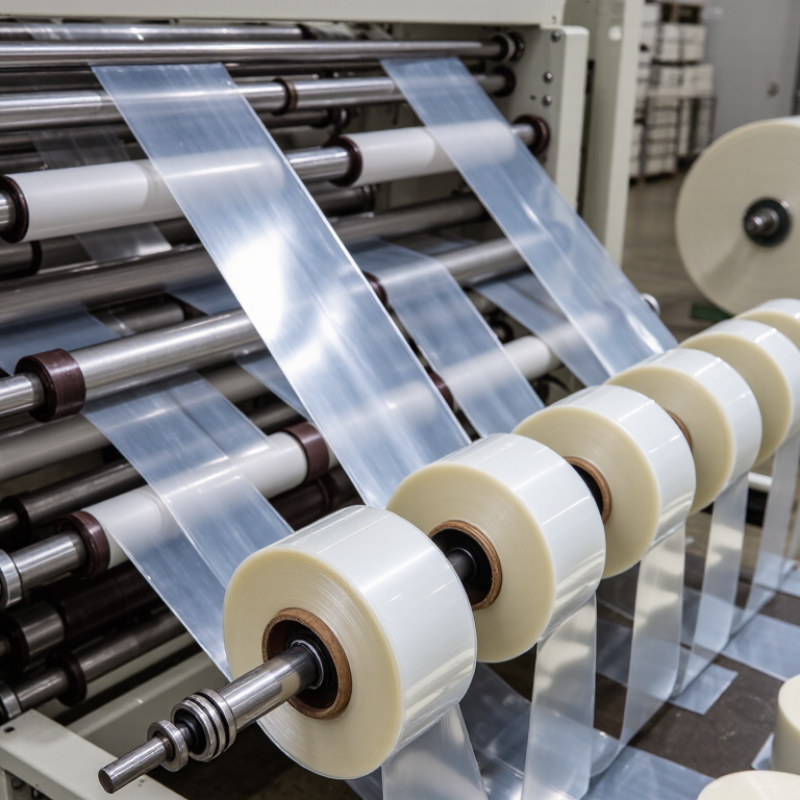
Choosing the right slitting unit starts with defining its role in your production process. It should match the material, line speed, finished roll width, and rewinding method. A unit for thin film may struggle with abrasive laminate or thick coated stock. That mistake can create uneven edges, dust, telescoping rolls, and costly downtime. Measure the actual web path, not only the machine specification sheet. Small details matter.

Tip: Observe your busiest production day. Record roll widths, substrate thickness, tension changes, and trim waste. These figures reveal whether you need razor, shear, or crush slitting. They also show where quality losses begin. Do not choose equipment based only on maximum speed. Stable operation at your normal speed is usually more valuable.

The slitting unit should also support your operators. Clear adjustment points, repeatable knife positioning, and accessible safety guards reduce setup errors. Ask how quickly an operator can change from one job to another. A useful trial should include real production material, not a convenient sample. Check edge quality under light, inspect roll hardness, and review tension across the full width. One overlooked core dimension can affect the entire downstream process. A perfect setup rarely exists, so leave room for future materials and changing order sizes. Still, oversizing the unit may add complexity without improving output.
Match the Machine to Your Materials and Product Specifications

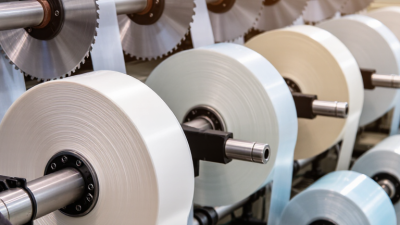
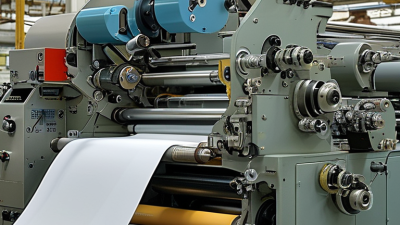
Match the slitting unit to the material first, then to the finished roll. Film can stretch or wrinkle under excess tension; paper may need firmer control to keep edges clean. Check web width, thickness, roll diameter, core size, and target slit width against the machine’s operating range.

The Flexible Packaging Association’s 2024 State of the U.S. Flexible Packaging Industry report estimated 2023 industry sales at $42.9 billion. That scale reflects diverse converting needs, not one universal machine setup. A specification sheet can still miss how a material behaves on your actual line.

Tip: Ask for a trial using your own material. Inspect edge quality, roll hardness, telescoping, and waste at production speed.

Tip: Confirm the slitting method suits the substrate and required tolerances; razor, shear, and crush cutting do not produce identical results.

Tip: Match controls and tension capability to the thinnest or most delicate web you run. Also check changeover time, operator access, and whether the unit handles your largest finished roll.

Numbers help, but they are not the whole story. Record trial settings and compare samples before committing; a small tension mismatch can become a costly defect across a long run.

Assess Slitting Methods, Precision, Speed, and Output Capacity

A slitting unit should match the material, not just the production target. Check whether shear, razor, or score slitting suits your film, paper, foil, or laminate. Shear cutting can handle tougher webs; razor slitting may work well with thinner materials. Score slitting depends heavily on consistent contact and suitable backing. Ask for a trial using your actual material. Small details matter.

Precision comes from more than the blade. Review the required slit-width tolerance, edge quality, and winding consistency. A sharp blade, stable web tension, and accurate alignment help prevent ragged edges and uneven rolls. Ask how adjustments are made and how often blades need replacement. A specification sheet can make this look simpler than it is. Real materials may stretch, curl, or vary between batches.

Speed matters, but maximum speed is not always useful if cuts become unstable. Compare operating speed with the quality your product requires, and check whether the unit can maintain tension during acceleration. Output capacity should reflect roll diameter, width, changeover time, and expected shifts—not just hourly speed. Test it first. Confirm that operators can load rolls safely and clear routine stoppages without slowing the entire line. A modest capacity buffer helps, though too much can mean paying for space and features you rarely use.

7 Tips for Choosing the Right Slitting Unit? - Assess Slitting Methods, Precision, Speed, and Output Capacity

Tip Assessment Dimension Common Options or Benchmark Typical Data Range Recommended Selection Guidance Key Verification Question
1 Match the slitting method to the material
Knife configuration, substrate type, and material thickness
Razor slitting, shear slitting, or score/crush slitting Film and laminates: about 10–200 μm
Paper and foil: about 20–500 μm
Board and nonwovens: often above 0.5 mm
Use razor blades for many thin films; choose shear knives for cleaner cuts on paper, foil, laminates, and coated webs; use score systems when the material and quality target allow compression cutting. Has the unit been tested with the exact material structure, thickness, coating, and tensile strength?
2 Define the required slit-width precision
Finished width tolerance and repeatability
Manual positioning, mechanical positioning, or servo-assisted positioning General-purpose work: approximately ±0.5–1.0 mm
Precision converting: approximately ±0.1–0.3 mm
Select guided positioning, stable knife holders, and tension control when customers require narrow tolerances or multiple narrow reels. What is the measured width tolerance across the full web width and throughout a complete production run?
3 Check operating speed against material stability
Maximum line speed versus sustainable production speed
Low-speed specialty slitting, standard production, or high-speed continuous slitting Specialty applications: about 50–150 m/min
Standard converting: about 150–500 m/min
Lightweight films may exceed 500 m/min with suitable controls
Do not select based only on the advertised maximum. Compare stable speed, acceleration time, splice handling, vibration, and actual output with the intended material. What is the proven continuous speed when producing the target slit widths and reel diameters?
4 Calculate output capacity, not just machine speed
Throughput, usable production time, and reel capacity
Output depends on web width, basis weight or thickness, line speed, setup time, and waste A practical utilization target is often about 70–85% of scheduled time after setup, inspection, and changeovers Estimate output using: usable output = web width × line speed × material mass per area × operating utilization. Include trim waste and downtime in the calculation. How many finished reels can be produced per shift after setup, knife changes, roll changes, and quality checks?
5 Evaluate web-tension and edge-quality control
Wrinkling, telescoping, blocking, burrs, and edge damage
Load-cell tension control, differential rewind shafts, lay-on rollers, and edge-trim extraction Tension settings vary widely by substrate; thin films may require substantially lower tension than paper or heavy laminates Prioritize closed-loop tension control for thin, stretchable, coated, or laminated materials. Confirm that the rewind system can maintain uniform hardness across all reels. Can the system maintain consistent reel hardness and clean edges from the first meter to the final reel?
6 Compare changeover and setup efficiency
Knife adjustment, core loading, recipe changes, and cleaning
Manual setup, assisted setup, or automated knife and recipe positioning Changeover time can range from roughly 10 minutes for simple repeat jobs to more than 60 minutes for complex multi-width setups Choose assisted or automated positioning when production involves frequent orders, many slit widths, or short runs. Store validated recipes to reduce setup variation. What is the average changeover time for the most common order pattern, including knife and core adjustments?
7 Review safety, maintenance, and future flexibility
Guarding, blade access, diagnostics, spare parts, and expansion capacity
Interlocked guards, emergency stops, condition monitoring, quick-change tooling, and modular controls Plan maintenance intervals according to duty cycle; inspect blades, bearings, belts, rollers, sensors, and tension components regularly Select a unit with accessible wear parts, documented maintenance procedures, available technical support, and enough width, speed, and reel-diameter capacity for expected growth. Are safety functions independently verified, and can the unit be upgraded for new materials, widths, or automation requirements?
Practical selection rule: Compare each slitting unit using the same material, web width, slit pattern, reel diameter, target tolerance, and production schedule. A machine that delivers stable quality at the required utilization rate is generally more valuable than one with a higher nominal speed.

Review Safety Systems, Maintenance Needs, and Automation Options

7 Tips for Choosing the Right Slitting Unit?

A slitting unit should protect operators without slowing routine work. Check that guards cover rotating shafts and knives, and that emergency stops are reachable from the operator’s station. Ask how the machine prevents restart during cleaning or blade changes. Small details matter. A poorly placed stop can be hard to reach when a web breaks.

Review the safety documentation, then watch a real setup and changeover. The U.S. Bureau of Labor Statistics reported 2.8 recordable injury and illness cases per 100 full-time workers in manufacturing in 2023. That figure is not specific to slitting, but it underlines why guarding and safe procedures deserve practical review. Also ask whether operators receive clear training and whether safety checks are documented. Paperwork alone is not enough.

Maintenance needs shape long-term performance. Inspect how quickly blades, spacers, and wear parts can be accessed, and ask about cleaning intervals and spare-part lead times. McKinsey’s 2018 analysis of predictive maintenance reported potential downtime reductions of 30–50% across industrial settings; actual results depend on the equipment and data quality. Automation can help with recipe storage, tension control, and repeatable setups. Still, more automation means more sensors and controls to maintain. Request a live demonstration using a material similar to yours, and consider whether your team can troubleshoot the system without waiting for outside support. I would question any specification that looks impressive but cannot be verified on the shop floor.

Compare Total Costs, Supplier Support, and Future Flexibility

7 Tips for Choosing the Right Slitting Unit

Tip 1: Calculate total cost, not purchase price. Include blades, setup waste, energy, operator training, spare parts, and planned maintenance.
Tip 2: Measure downtime honestly. A low-cost unit becomes expensive when changeovers consume an entire shift.
Tip 3: Request a live trial using your actual film, widths, and speed. Laboratory performance can look better than production reality.
Tip 4: Examine supplier support before signing. PMMI’s 2024 State of the Industry report identifies labor availability and aftermarket service as continuing packaging-equipment concerns. Ask about response times, remote diagnostics, training, and local technicians.
Tip 5: Check spare-parts security. A missing sensor or tension component can stop a line for days. I have seen carefully negotiated prices lose their value after one delayed repair.
Tip 6: Test future flexibility. Confirm whether the unit can handle new materials, narrower widths, higher speeds, and automated roll handling.
Tip 7: Review upgrade paths, software access, and data integration. McKinsey reports that predictive maintenance can reduce machine downtime by 30–50% and maintenance costs by 10–40%. Those figures are broad industrial benchmarks, not guarantees for every slitting line. A perfect spreadsheet still misses a poor handoff. Compare five-year operating scenarios, including conservative production volumes and unexpected service calls. Ask the supplier to document every assumption. That detail may reveal the better investment.