 Contact immediately
Leave Your Message
-
Contact WhatsApp

-
 Contact Phone
 -
 Contact Email
Choosing a Die Cutting Press in 2026 is not simply a comparison of tonnage, speed, or purchase price. The right machine must match your material, tooling, production volume, and operator capability. A compact press may suit short-run packaging, while a high-speed automatic model can support demanding folding-carton schedules. The wrong choice becomes visible quickly: crushed edges, incomplete cuts, excessive setup time, and wasted sheets.
Jean-Pascal Bobst, a respected packaging-machinery executive, has often emphasized the importance of repeatable performance over impressive specifications. His guiding statement is: “Productivity is never only about speed; it is about repeatable performance.” That principle deserves attention when reviewing every Die Cutting Press. A press that runs slightly slower but holds registration accurately may produce more saleable output. Sometimes, less is more.
Look closely at feeding stability, stripping accuracy, platen pressure, format range, and control-system usability. Ask for a live demonstration using your actual board, film, or corrugated stock. Samples can reveal problems that brochures hide. Check the changeover procedure with real operators, not only sales staff. Their experience may expose awkward access points, fragile sensors, or unclear maintenance routines.
Energy consumption and service availability also matter in 2026. A technically advanced press becomes a liability when replacement parts arrive late. Consider local technicians, training, software support, and total ownership cost. I would not choose solely by maximum speed. That decision sounds efficient, but it can be shortsighted. The best Die Cutting Press is the one that delivers consistent quality, manageable downtime, and room for your production needs to change.
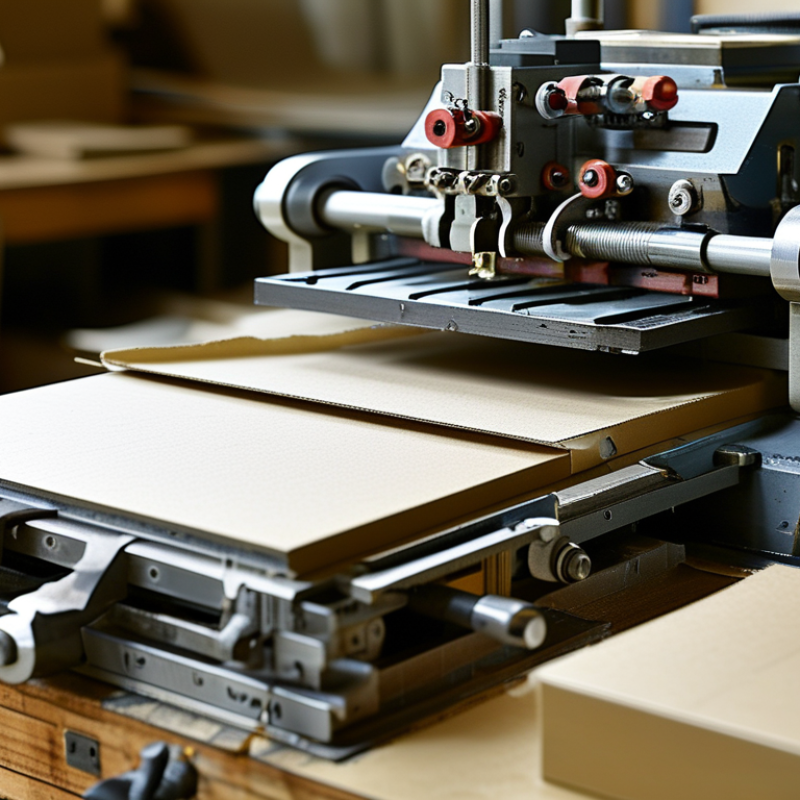
Before comparing machines, define your die cutting needs and production goals clearly. Identify the materials, thicknesses, sheet sizes, and finished shapes you will process. Record monthly volume, peak demand, acceptable waste, and required delivery speed. These details reveal the press capacity you actually need.
A narrow material range may suit a compact press with simple tooling. Mixed substrates may require adjustable pressure, reliable registration, and stronger feeding control. Short runs often benefit from quick setup and easy die changes. Long production runs demand stable pressure, durable components, and consistent output. Ask how many setup hours your team can afford each week. Measure twice.
Do not judge a press by speed alone. During trials, inspect cut edges, crease accuracy, blank separation, and waste removal. Check a 0.5-millimeter registration shift on small samples. Track setup time from the first sheet to acceptable production. Ask operators whether controls feel clear after a demanding shift. I have seen production plans fail because operators were ignored. That assumption deserves review. A technically capable press may still underperform when training, maintenance access, or floor space receives little attention. Leave room for future materials, but avoid paying for capacity your schedule cannot use.
| Press Type | Typical Cutting Force | Typical Working Area | Typical Production Speed | Best-Suited Materials | Best Production Volume | Main Strengths | Main Limitations | Key Selection Priority |
|---|---|---|---|---|---|---|---|---|
| Manual Clicker Press | Approximately 5–30 tons | About 300 × 400 mm to 600 × 1,000 mm | Around 100–300 cutting cycles per hour, depending on the operator and material | Leather, textiles, gaskets, foam, rubber, felt, and thin composite sheets | Samples, prototypes, repairs, and low-volume orders | Low purchase cost, simple operation, flexible tooling, and minimal setup requirements | Labor-intensive, slower output, and greater variation between operators | Budget, operator skill, die access, and required part consistency |
| Hydraulic Swing-Arm Press | Approximately 15–80 tons | About 400 × 400 mm to 1,000 × 1,600 mm | Around 200–600 cutting cycles per hour | Foam, rubber, leather, insulation, textiles, and laminated materials | Low to medium-volume production with varied part sizes | Large cutting area, adjustable stroke, and good access for different material layouts | Requires manual positioning and generally provides lower repeatability than automated systems | Maximum die size, material thickness, pressure control, and ergonomic operation |
| Straight-Side Hydraulic Platen Press | Approximately 30–300 tons | About 600 × 800 mm to 2,000 × 3,000 mm | Around 100–500 cycles per hour, depending on stroke and loading method | Thick rubber, gasket materials, insulation, composites, plastics, and multilayer sheets | Medium to high-volume production involving demanding materials | High force, stable platen alignment, controlled pressure, and suitability for large dies | Higher energy use, larger footprint, and slower changeovers than dedicated rotary systems | Required tonnage, platen parallelism, safety controls, and available floor space |
| Automatic Flatbed Die Cutter | Approximately 20–250 tons | Commonly 600 × 900 mm to 1,500 × 2,500 mm | Approximately 1,000–6,000 sheets or strokes per hour | Paperboard, corrugated board, labels, folding cartons, films, foams, and thin laminates | Medium to high-volume, repeatable sheet-fed production | Accurate registration, automated feeding, efficient nesting, and consistent repeat production | Higher investment, more complex setup, and less flexibility for irregular low-volume jobs | Sheet size, feed accuracy, stripping requirements, die-change time, and throughput |
| Rotary Die Cutting Press | Cutting load is distributed continuously; machine capacity is specified by web width, material, and tooling | Typical web widths of 150–1,600 mm | Approximately 20–300 meters per minute, depending on material and process complexity | Labels, pressure-sensitive materials, films, foils, tapes, thin foams, and flexible laminates | High-volume continuous-web production | High speed, continuous operation, reduced handling, and efficient repeat jobs | Higher tooling cost, less economical for short runs, and limited suitability for thick materials | Web width, line speed, roll handling, waste removal, registration, and tooling cost |
| Servo-Electric Precision Press | Approximately 5–100 tons | About 300 × 500 mm to 1,000 × 1,500 mm | Approximately 300–2,000 cycles per hour, depending on stroke and automation | Thin films, electronic components, medical materials, insulation, gaskets, and multilayer laminates | Medium-volume production requiring repeatable precision and frequent recipe changes | Programmable motion, accurate force and position control, lower idle energy use, and fast product changeovers | Higher initial cost and greater dependence on controls, sensors, and maintenance expertise | Required accuracy, force profile, software capability, data logging, and service support |
| High-Speed Web Press with Inline Processing | Specified by web tension, tooling, and process configuration rather than a simple tonnage rating | Typical web widths of 200–1,600 mm | Approximately 50–300 meters per minute | Labels, films, foils, coated papers, tapes, and flexible packaging substrates | Very high-volume production with stable repeat orders | Combines die cutting with printing, laminating, slitting, inspection, or waste removal in one line | Complex installation, long qualification time, high capital cost, and reduced flexibility for small batches | Total line speed, web stability, inline processes, changeover time, and return on investment |
Note: The figures above are typical planning ranges for equipment selection. Actual performance depends on material composition, thickness, die design, cutting pattern, stroke length, feeding method, automation level, and operator workflow.